San Francisco alone now charges additional plan review services at rates reaching $399 per hour, while the 2026 city impact fee schedules list residential school fees at $3.79 per square foot.
What I’ve seen with clients is that even fairly straightforward remodels can get delayed or become significantly more expensive once city-specific requirements and reviews begin stacking up. That’s why I usually recommend treating permit costs as a separate planning category early, because it helps your project feel far more predictable before construction even starts.
This guide breaks down Bay Area building permit costs for 2026, including permit fees, plan checks, impact fees, timelines, and the hidden expenses that tend to create the biggest surprises later if nobody catches them early.
Your Quick Summary:
- Smaller residential remodel permits in the Bay Area often fall within the hundreds to low thousands, while larger projects involving ADUs, additions, or major structural work can rise significantly once plan review, utility, and impact fees are included.
- San Francisco currently bills certain additional plan review services at $399/hour, while residential school impact fees are listed at $3.79 per square foot under the city’s 2026 impact fee schedules.
- Palo Alto’s adopted fee schedules list plan check fees at 125% of the building permit fee for some residential project categories, while Oakland lists residential plan review fees at $10.60 per $1,000 valuation.
- A 2026 Terner Center analysis of California housing developments found that impact fees averaged nearly $20,000 per unit, with some projects exceeding $30,000 per unit depending on project scope and jurisdiction.
- Unexpected reviews, utility requirements, and revision cycles are often what push projects beyond their original permitting budget.
How Much Do Building Permits Cost in the Bay Area?
Bay Area permit costs vary significantly by city. San Francisco and many Peninsula jurisdictions generally carry higher permitting and review costs, while several East Bay and North Bay cities have more moderate fee structures. Public fee schedules across Bay Area jurisdictions also show that permit pricing can increase substantially once plan review, impact fees, and additional trade permits are included.
People frequently run into three avoidable problems during the permitting process:
- Underestimating total costs because plan review, utility, and re-inspection fees were not accounted for early
- Missing city-specific programs like San Jose’s pre-approved ADU plans that can simplify approvals
- Experiencing delays when plans do not fully meet current California code requirements
Permit costs usually increase as projects become larger and more complex, especially when structural work or multiple approvals are involved.
Simple Interior Remodels & Minor Work
What's Included: Kitchen/bathroom remodels without structural changes, electrical panel upgrades, plumbing fixture replacements, HVAC installations
Cost Range: Many smaller residential permits fall within the hundreds to low thousands, depending on jurisdiction, valuation, and the number of trade permits required.
Best For: Cosmetic updates, fixture replacements, or straightforward interior improvements that do not trigger a major structural review.
Mid-Range Projects (ADUs, Room Additions, Major Remodels)
What's Included: Accessory Dwelling Units, garage conversions, room additions, major kitchen/bath gut renovations involving structural, plumbing, electrical, and mechanical work
Cost Range:
- ADUs: commonly $5,000–$15,000+ in permit-related costs depending on city, square footage, utility requirements, and impact fees
- Room additions: typically $3,000–$10,000+
- Major whole-home remodels: often $5,000–$15,000+ once multiple departments and structural reviews are involved
Best For: Projects adding square footage, changing layouts, or requiring structural review and multiple trade permits.
New Construction & Large-Scale Projects
What's Included: New single-family homes, multi-family developments, complete tear-down/rebuilds, commercial buildings (permits typically 1-2% of total construction cost, plus impact fees)
Cost Range:
- Residential new construction: often $15,000–$50,000+ once permit fees, impact fees, utility connections, and infrastructure assessments are included
- Commercial projects and multi-unit developments: can easily exceed $50,000+, depending on project valuation and jurisdiction requirements
Best For: Ground-up construction and large-scale projects requiring multiple review stages, agency coordination, and extensive code compliance review.
City-by-City Cost Comparison
These figures reflect publicly available 2025–2026 municipal fee schedules and development fee tables across major Bay Area jurisdictions.
Most cities calculate permit costs using project valuation, square footage, plan review percentages, and additional impact or infrastructure-related fees.
| City | Plan Check Fee | Base Permit Fee | Notable Impact Fees |
|---|---|---|---|
| San Francisco | Additional plan review services billed at $399/hour for certain reviews | Valuation-based permit calculations under SF Building Code tables | Residential school fees listed at $3.79/sq ft under 2026 impact fee schedules |
| Oakland | Residential new construction plan review listed at $10.60 per $1,000 valuation (minimum $336) | Inspection fees listed at $8.00 per $1,000 valuation for residential new construction | Impact fees may be deferred until Certificate of Occupancy for qualifying projects |
| Palo Alto | Single-family building plan check fees listed at 125% of permit fee | Building permit fees calculated as a percentage of project valuation | Citywide transportation and development impact fees apply to qualifying projects |
| San Jose | Some review categories are billed hourly, and San Jose permit processing and plan review services can exceed $227–$300/hour depending on review type. | Building permits are valuation-based. ADU and residential permit fees commonly reach several thousand dollars depending on square footage, valuation, and trade permits. The city also provides an official permit fee estimator for residential projects. | ADUs larger than 750 sq ft may trigger school and park impact fees, while units below 750 sq ft are generally exempt under California ADU rules. San Jose also applies parkland impact fees under Resolution No. 78474. |
| Berkeley | Official Berkeley fee schedules list a $150 base permit fee for improvements up to $3,000 valuation, with valuation-based increases beyond that amount. | Berkeley uses valuation-based permit calculations, including approximately $2.40 per $100 of valuation above initial thresholds for many residential projects. | Berkeley’s pre-approved ADU program provides a 50% reduction in plan check fees for qualifying approved designs. Development impact fees may also apply depending on project scope. |
| Daly City | Daly City’s FY 2025–2026 Master Fee Schedule lists plan review fees at approximately 79% of the building permit fee, with additional review billed at $176/hour. | Building permit fees are tiered by project valuation. The city also applies separate fees for electrical, plumbing, mechanical, and planning-related review. | Additional school district impact fees may apply through Jefferson Union High School District and related districts. Daly City also adopted the 2025 California Building Codes effective January 1, 2026. |
Key Factors That Affect Building Permit Costs
Many permit expenses only appear once projects move deeper into review and coordination stages. Expenses can rise quickly once projects trigger structural reviews, utility upgrades, impact fees, re-inspections, or approvals from multiple departments.
Here’s what to keep in mind.
Project Valuation & Construction Cost
Many Bay Area cities calculate permit fees using your project’s estimated construction value, not just the type of permit being filed. San Jose, for example, officially uses ICC valuation methodologies within its building fee schedules, while residential construction taxes can reach 2.42% of project valuation for certain categories.
What I usually tell clients is that once structural work, layout changes, or higher-end finishes get added, permit costs often rise faster than expected because the city’s estimated project valuation increases along with the scope of work.
Square Footage & Project Scope
Project size affects permit costs because many Bay Area cities use stepped valuation formulas where fees increase as project value and scope increase. San Francisco’s adopted building fee tables, for example, show permit issuance fees rising from $161 for the first $500 valuation plus $5.13 per additional $100 for smaller projects to substantially higher rates at larger valuation tiers.
What I’ve seen with clients is that once a project becomes larger or more complex, additional reviews can start getting triggered very quickly. Bigger additions, multi-story work, or major layout changes may require structural review, fire sprinkler review, accessibility compliance, or energy-related approvals, all of which can increase both permit costs and construction costs.
That’s usually the point where projects start feeling more overwhelming if those requirements were never planned for early.
Project Complexity & Trade Permits Required
The number of trades involved directly affects total permit costs. Projects requiring structural, electrical, plumbing, mechanical, or engineering review typically cost more than single-trade permits because multiple departments may need to review and approve the plans.
What I’ve seen with clients is that costs usually start increasing once projects trigger additional structural or site-specific review requirements. In San Francisco, hillside and seismic hazard zone projects may require geotechnical reports, third-party engineering review, or Structural Advisory Committee review under the city’s Slope and Seismic Hazard Zone Protection Act.
Complex projects involving seismic upgrades, structural changes, or hillside construction can also trigger longer review timelines, revised plans, and additional engineering coordination. I usually recommend expecting at least some revisions during plan review because approvals rarely move from submission to approval without comments or corrections, especially on larger projects.
Impact Fees, Utility Charges & Special Assessments
Impact fees for schools, parks, roads, utilities, and public infrastructure can add substantial costs to new housing projects. A 2026 Terner Center analysis of California affordable housing developments found that impact fees added nearly $20,000 per unit on average, while some projects were assessed more than $30,000 per unit in fees.
California Senate Bill 937, effective January 2025, allows deferral of some impact fees until Certificate of Occupancy for certain housing projects, easing upfront cash flow. School impact fees are generally excluded from this deferral.
Cost Breakdown: What You're Actually Paying For
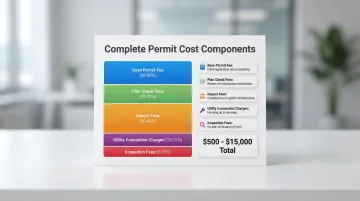
Bay Area permit costs include five main categories. Here's what each fee covers and when you'll pay it.
Base Building Permit Fee
One-Time
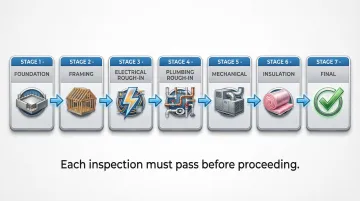
Covers the jurisdiction's cost to issue the permit and conduct required inspections. Most projects require seven inspections:
- Foundation
- Framing
- Electrical rough-in
- Plumbing rough-in
- Mechanical
- Insulation
- Final
Jurisdictions calculate this fee using valuation formulas or flat rates depending on project type.
Plan Check & Review Fees
One-Time (re-submittal fees may apply)
Many Bay Area cities calculate plan review fees as a percentage of the building permit fee. Palo Alto’s adopted fee schedule, for example, lists plan check fees at 125% of the building permit fee for certain residential categories, while Daly City lists plan review fees at approximately 79% of permit fees.
Impact & Development Fees
One-Time
Jurisdictions charge these fees to offset the impact of new development on public infrastructure (schools, parks, roads, transit). Impact fees can add substantial costs to larger projects involving new housing, additions, or ADUs.
Utility Connection & Capacity Charges
One-Time
These costs become more significant once projects require new utility connections, electrical panel upgrades, or expanded water and sewer capacity.
Inspection & Re-Inspection Fees
Recurring (per inspection)
Initial inspections are included in permit fees. Additional inspection or re-inspection charges may apply when corrections require repeat site visits or revised approvals.
Projects requiring special inspections (structural steel, seismic devices) may incur additional fees.
Low-Cost vs High-Cost Permits: What's the Difference?
The same renovation project can cost vastly different amounts depending on three key decisions you make before filing. Understanding these cost drivers helps you budget accurately and avoid unnecessary expenses.
Jurisdiction Selection Impact
Where you build matters as much as what you build. San Jose offers pre-approved ADU plans and streamlined processes that reduce both fees and review time. San Francisco and Palo Alto require extensive design review, environmental assessments, and multiple approval layers - San Jose’s pre-approved ADU program can simplify approvals and reduce review complexity, while cities like San Francisco and Palo Alto often involve additional layers of design review and permitting requirements.
Application Preparation & Completeness
The quality of your initial application determines whether you sail through or face repeated rejections. Complete, code-compliant plans submitted on the first attempt avoid costly review cycles.
Incomplete applications trigger re-submissions, and each cycle adds fees:
- Additional review fees may apply when revised plans require further departmental review or correction cycles.
- Revised submissions can also extend approval timelines depending on departmental workload and project complexity.
- Delays can also affect contractor scheduling and overall project coordination.
What I’ve seen with clients is that incomplete plans usually create far more stress later because revisions can slow approvals, affect scheduling, and increase review costs unexpectedly.
DIY vs Professional Permit Services
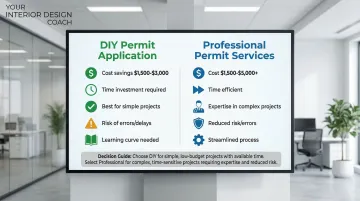
If you’re working on a smaller remodel, handling permits yourself can definitely save money, especially for straightforward cosmetic updates. But once a project involves structural changes, multiple inspections, or coordination across departments, the process can become surprisingly time-consuming. That’s usually where permit expediters or full-service design firms come in.
For larger remodels and ADUs, having professionals manage revisions, approvals, and city communication can make the entire process feel far smoother and less stressful.
In my experience, the biggest advantage of professional permit support is usually clarity. Once people understand what reviews, timelines, and approvals their project is likely to trigger, the entire process starts feeling much more manageable and far less overwhelming.
How to Estimate Your Building Permit Budget
Estimating your permit budget accurately depends on three factors: your city's fee structure, your project's valuation, and additional fees that vary by jurisdiction.
Start by gathering baseline information, then build in contingencies.
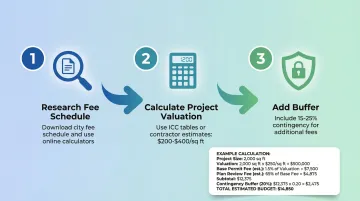
Research Your City's Fee Schedule & Use Online Calculators
Start with your local building department's website:
- Download the fee schedule (usually available as PDF)
- Use online permit fee calculators if available (input square footage and project type)
- For projects over $100,000 valuation, call the department directly to discuss calculations and special requirements
These tools give you a baseline, but the real cost depends on how your project is valued.
Calculate Project Valuation Using ICC Tables or Contractor Estimates
Most jurisdictions use International Code Council (ICC) valuation tables or require contractor estimates to determine project value.
Planning guidance:
- Standard construction: $200-$300/sq ft
- Higher-end finishes: $300-$400/sq ft
- Luxury builds in expensive markets: $400+/sq ft
Add 15-25% Buffer for Additional Fees & Contingencies
Your base permit fee is just the starting point. Add a buffer to cover:
- Plan check fees (typically 35-95% of the permit fee)
- Impact fees and utility connection charges
- Potential re-inspection fees if corrections are needed
- Jurisdiction-specific requirements discovered during review
For interior renovation projects requiring city permitting drawings, YIDC helps homeowners and contractors prepare accurate plans that reduce revision requests and move through approvals faster. Clear permitting drawings and organized documentation can help reduce revision requests and approval delays during review.
For projects that require city permitting drawings, I usually recommend getting the plans and documentation organized early so you can avoid unnecessary revision cycles or approval delays later. If you’ve been feeling stuck trying to move your project forward or you’re unsure what the next step should be, reach out at 408-306-5003 for a free consultation.
Your Quick Recap
The projects that feel most manageable are usually the ones where permitting requirements are planned for early rather than discovered during review.
The projects that move more smoothly are usually the ones where the permit process is treated as part of the planning stage early instead of something handled after drawings are finished.
Understanding how your city calculates permit fees, what reviews your project is likely to trigger, and where additional costs tend to appear can make the entire process feel much more manageable before construction even starts.
If you’re still feeling stuck trying to understand what approvals your project may require or how to realistically budget for permitting costs, reach out at 408-306-5003 for a free consultation, and I can help you figure out the next best step for your project.
Frequently Asked Questions
Do permit fees increase if my project plans change after submission?
Yes, they can. What I’ve seen with clients is that once project scope changes after submission, cities may require revised drawings, additional plan review, or updated valuation calculations. Even relatively small layout or structural changes can trigger extra review comments and increase both permit costs and approval timelines.
Why do permit costs vary so much between Bay Area cities?
Every Bay Area jurisdiction sets its own fee schedules, valuation formulas, review requirements, and impact fees. Some cities also involve additional planning, environmental, or design review processes that increase both costs and timelines. That’s why the exact same project can feel much more straightforward in one city and far more layered in another.
Are impact fees included in the base building permit fee?
Usually not. In many cases, impact fees are charged separately from the base permit itself. These fees can include school, transportation, utility, sewer, park, or infrastructure-related charges depending on your project scope and location. Impact fees are often excluded from early permit estimates, which is why total costs can rise later during approvals.
Can incomplete plans delay permit approval?
Yes, and this is something I see constantly. Incomplete drawings, missing structural details, or unclear project scope often lead to correction cycles that slow approvals and create additional review comments. Getting your plans organized properly early usually makes the entire process feel much more manageable and predictable later.
Is it worth getting professional help for the permit process?
For smaller and more straightforward projects, handling permits yourself may be manageable if you’re comfortable researching local requirements and coordinating with the city directly. But once projects involve structural work, multiple trades, or planning review, professional guidance often helps reduce confusion, revision cycles, and unexpected delays. In my experience, the biggest benefit is usually clarity because people feel far less overwhelmed once they understand exactly what their project is likely to require.