
Without experienced guidance, owners struggle with technical jargon, contractor disputes, and reactive decisions that cascade into budget overruns and delays.
Owner’s representatives have long been used on larger construction projects to help coordinate communication, track details, and protect the owner’s interests throughout the process. That same role can also be valuable in residential remodels and interior buildouts, especially when projects involve multiple contractors, complex decisions, or tight timelines.
This guide explores how owner's representatives protect your interests, improve communication, and help you avoid costly mistakes throughout your project.
Your Quick Summary
- Expert design guidance helps you make confident decisions and overcome creative roadblocks in your space
- Work within your budget using existing furniture and practical solutions tailored to your constraints
- Get unstuck faster with collaborative problem-solving from start to finish
- Reduce overwhelm by learning which questions to ask and how to articulate your vision
What Is an Owner's Representative (Brief Context)
An owner's representative is a construction professional hired to act solely on your behalf throughout the planning, design, and construction process. Think of them as your eyes, ears, and advocate, someone who monitors every aspect of the project to protect your financial and operational interests.
Owner's representatives are engaged across a wide range of projects: capital construction, commercial renovations, interior buildouts, and residential remodels. They're particularly valuable when you lack in-house construction expertise, face tight budgets or timelines, or simply need someone to manage the countless technical decisions that arise during any build.
The key distinction: unlike contractors, architects, or construction managers, whose primary obligations are to their own scopes and contracts, an owner's rep works exclusively for you. Their sole responsibility is ensuring your project succeeds on your terms.
Key Advantages of an Owner's Representative
The advantages below focus on measurable, operational outcomes that directly impact project success: cost control, schedule adherence, quality results, risk reduction, and stakeholder satisfaction. Each advantage demonstrates how an owner's rep creates tangible value through specialized knowledge, proactive management, and serving as your dedicated advocate throughout the project lifecycle.
Advantage 1: Expert Guidance and Specialized Knowledge
Owner's representatives bring deep expertise in construction processes, design coordination, contractor management, and project delivery methods that most owners simply don't possess.
In my experience, the value of guidance is often in the questions you ask before the work starts. Is the scope clear? Are the materials decided? Does the layout actually support what you want the room to do? Are you being asked to approve something before you understand the trade-off? Those are the moments where early clarity can save you from rushed decisions later.
Why this matters: Poor project data and miscommunication, often stemming from lack of clear owner requirements or oversight, are responsible for 48% of all rework in U.S. construction.
On top of that, 30.9% of construction professionals cite "unresponsiveness to questions/requests" as a top reason for miscommunication, a gap frequently caused by owners who lack the bandwidth or technical knowledge to respond quickly.
Expert guidance helps you make informed decisions at critical junctures, avoid common pitfalls, and negotiate from a position of knowledge rather than vulnerability.
Instead of learning construction management on the fly, often at significant cost, you gain immediate access to someone who has navigated these challenges hundreds of times before.
If you're stuck on how to approach a renovation and haven't been able to move things forward, call 408-306-5003 for a free consultation, sometimes that one conversation is what it takes to get unstuck.
When expert guidance matters most:
- First-time project owners undertaking major renovations
- Complex projects with multiple stakeholders and consultants
- Projects involving unfamiliar construction methods or materials
- When regulatory requirements, permitting, or code compliance are involved
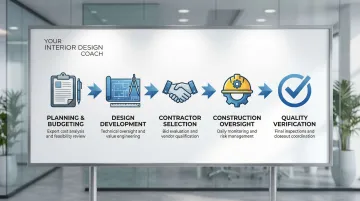
Advantage 2: Budget Control and Cost Management
An owner's rep establishes realistic budgets, tracks costs throughout the project, identifies potential overruns early, and helps you understand where money is actually going versus where it was planned to go.
They create detailed cost breakdowns beyond just construction bids, review contractor invoices for accuracy, manage change orders, and find cost-saving opportunities without sacrificing quality.
The financial reality: 85% of construction projects experience cost overruns, with large projects typically finishing up to 80% over budget. For megaprojects, 98% become delayed or over budget, with cost overruns often exceeding 30%.
The owner's rep advantage: Projects with an owner's representative can achieve cost savings of 5-15% of total project cost and see approximately 23% fewer change orders. This protection against budget creep means you're not scrambling for additional funding mid-project or making painful compromises to finish the work.
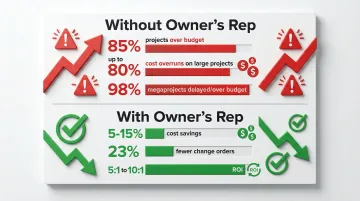
Budget control matters most when you're working with fixed or limited budgets, managing projects funded by loans or public money requiring accountability, or juggling multiple financial priorities simultaneously.
Advantage 3: Time Efficiency and Schedule Management
An owner's rep coordinates timelines across design, permitting, procurement, and construction phases to keep projects on schedule and identify delays before they cascade.
They proactively coordinate contractor schedules, track critical path items, expedite decision-making processes, and reduce downtime between project phases. When someone is actively managing the schedule on your behalf, delays stop quietly compounding and start getting addressed before they affect your move-in date.
The schedule reality: 61% of owners report that schedule delays occur on their typical projects, with large projects typically taking 20% longer to finish than scheduled. Globally, 77% of megaprojects are 40% or more behind schedule.
The owner's rep advantage: Projects with an owner's rep can achieve 19% faster delivery. Since 68% of trades point to poor schedule management as a key contributor to decreased labor productivity, having someone actively manage the master schedule prevents bottlenecks and communication delays from derailing your timeline.
Faster project completion means earlier occupancy or use, reduced carrying costs, and avoided inflation impacts on remaining work. Schedule efficiency matters most for projects with occupancy deadlines, seasonal construction windows, business operations that can't afford extended disruption, or when financing terms are time-sensitive.
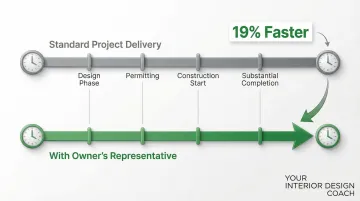
Advantage 4: Quality Assurance and Risk Mitigation
An owner's rep conducts regular site inspections, verifies work meets specifications and codes, catches deficiencies early, and ensures contractors fulfill their obligations before final payment.
Their quality oversight includes:
- Reviewing submittals and shop drawings
- Conducting progress inspections
- Documenting issues with photos and reports
- Coordinating punch list completion
- Verifying warranty requirements are met
The cost of quality failures: Rework accounts for 1-20% of total project cost, with most studies clustering between 4-10%. When indirect costs like schedule delays and administration are included, total rework costs can range from 7.25% to 10.89% of total construction cost. More importantly, up to 70% of total rework is design-induced, meaning problems that could have been caught before construction even began.
The owner's rep advantage: Early detection of design errors and omissions, continuous quality monitoring, and real-time contractor accountability prevent performance issues from escalating into costly defects. Since 69% of owners say poor contractor performance is the single biggest reason for project underperformance, having an owner's rep hold contractors accountable protects your long-term investment and reduces post-completion headaches.
Quality assurance matters most for projects involving critical systems (structural, mechanical, waterproofing), projects in areas with strict code enforcement, or when you lack technical knowledge to assess construction quality yourself.
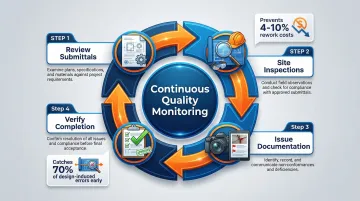
Advantage 5: Communication and Stakeholder Coordination
An owner's rep facilitates clear communication among owners, architects, contractors, subcontractors, and other stakeholders, translating technical language, managing expectations, and keeping everyone aligned.
They run regular project meetings, distribute clear documentation, resolve conflicts before they escalate, ensure your questions get answered, and keep the project team accountable to each other.
The communication crisis: Poor project data and miscommunication cost the U.S. construction industry $31.3 billion in rework in 2018 alone.
Construction teams spend 35% of their time (over 14 hours per week) on non-productive activities like looking for project information, conflict resolution, and dealing with mistakes. Errors or omissions in contract documents are consistently a top cause of construction disputes.
The owner's rep advantage: By acting as the central hub for information and ensuring all stakeholders are aligned, an owner's rep reduces misunderstandings, prevents costly mistakes from miscommunication, and creates a collaborative environment where problems get solved rather than blamed. They ensure a rigorous audit trail of decisions and changes, preventing the "he said, she said" disputes that derail projects.
Coordination matters most for projects with multiple design consultants, projects involving owner-occupied spaces requiring careful coordination with ongoing operations, or when you're managing other priorities and can't attend every meeting.
What Happens When an Owner's Representative Is Missing or Ignored
Without independent owner oversight, projects face predictable and costly consequences. Budget overruns from missed cost items or uncontrolled change orders become the norm rather than the exception. Schedule delays from poor coordination or reactive decision-making extend timelines by months. Teams discover quality issues too late to fix affordably, leading to expensive compromises or post-completion lawsuits.
These problems show up in predictable ways:
Common consequences include:
- Financial losses: Unchecked change orders and contractor cost inflation
- Decision fatigue: Owner overwhelm from managing too many technical details without expertise
- Quality compromises: Defects discovered after substantial completion when fixes are most expensive
- Contractor disputes: Conflicts arising from unclear communication or unmet expectations
- Compliance gaps: Missed regulatory or code requirements that halt work or require expensive corrections
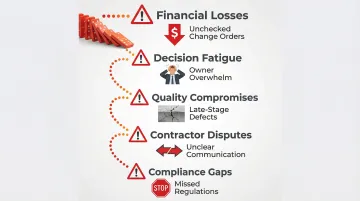
The Compounding Effect of Poor Oversight
A GAO report found that 25% of military construction projects delayed for at least a year were stalled due to "poor initial planning," including design errors that could have been addressed earlier. The absence of someone asking the right questions at the right time, and holding teams accountable, creates problems that snowball throughout the project.
How to Get the Most Value from an Owner's Representative
Owner's representatives deliver maximum value when engaged early - ideally during planning or design phases - because that's when the most decisions are still open and changeable without cost.
Early involvement allows them to vet design decisions for constructability and establish realistic budgets before you commit. Once structural work begins, the window to course-correct shrinks fast.
To maximize value from your owner's representative:
- Communicate your priorities clearly from the start
- Respond to recommendations promptly to keep the project moving
- Trust their expertise while staying involved in key decisions
The owner's rep protects your interests throughout the project lifecycle.
For design-heavy renovations, I usually recommend getting clarity before construction decisions start piling up. Layout, finishes, materials, bid details, and contractor questions are all easier to sort through before work is already underway. If you’re stuck on the design side of your renovation or unsure what needs to be clarified first, reach out for a free consultation at 408-306-5003, and we can take it from there.
Your Quick Recap
Most renovation problems I see do not start with one mistake. They usually start with small decisions that were unclear, rushed, or made too late. An owner’s rep helps keep the larger project picture in view, and for design-heavy remodels, design guidance can help make sure layout, finishes, materials, and contractor questions are clear before they become expensive to change.
- Budget overruns almost always start before construction - they begin in the planning gap
- Vague contractor bids are a warning sign; clear scope prevents cost surprises later
- Change orders are where projects bleed money; an owner's rep catches them early
- The ROI argument is simple: their fee is smaller than a single unchecked change order
- Engaging an owner's rep at contract review stage - before breaking ground - is the highest-impact moment (bonus insight)
- Owner's reps also reduce your personal stress load, which has real value beyond the numbers (bonus insight)
If you're still feeling stuck and haven't been able to move things forward, let's talk! Reach out for a free consultation at 408-306-5003, and we can take it from there.
Frequently Asked Questions
What does an owner's rep do?
An owner's rep acts as your advocate throughout the project, overseeing budget, schedule, quality, and contractor performance. They identify problems early, manage costs, and ensure work meets specifications, so you don't have to become a construction expert overnight.
How much does an owner's rep cost?
Fees typically range from 1-5% of total construction cost, depending on complexity. The ROI ranges from 5:1 to 10:1 through cost savings and schedule improvements; they often save more than their fee.
How do owner's reps get paid?
Common structures include a percentage of construction cost (1-5%), hourly rates ($75-$200+), fixed lump sum, or monthly retainer. Payment terms align to project milestones or monthly progress based on project size and scope predictability.
What are the benefits of hiring an owner's rep?
Key benefits include 5-15% cost savings, 19% faster delivery, 23% fewer change orders, and higher quality outcomes. You also gain expert guidance, reduced stress, and protection against contractor issues that could compromise your investment.
When should I hire an owner's representative?
Hire during planning or early design phases so they can influence budget development, design decisions, and contractor selection. Early engagement allows them to prevent problems rather than react, maximizing their value.
Do I need an owner's rep for a small renovation project?
Their value extends to smaller renovations when you lack construction expertise, have limited time, or want professional advocacy for quality and budget control. If you're investing significant money or facing complex decisions, they can prevent costly mistakes regardless of size.