The main culprits? Unexpected costs, missing belongings, and the general hassle of coordinating dozens of moving parts at the same time.
A structured moving checklist turns that chaos into manageable steps by eliminating the cognitive load of tracking dozens of parallel tasks, which is exactly what causes last-minute panic and missed deadlines.
In my experience, the people who move most smoothly are not the ones who pack perfectly - they are the ones who made decisions about furniture placement, storage, and decluttering before the truck arrived. Whether you're moving into a new home or staging a property for guests, this guide walks you through every phase: from initial planning eight weeks out to settling into your new home with intention.
Your Quick Summary
- Begin planning 8 weeks before your move date to secure better rates and reduce last-minute stress
- Compare DIY versus professional moving costs early to find the best value for your budget
- Pack strategically by room, starting with storage areas and seasonal items you won't need immediately
- Pack a moving day essentials box with toiletries, chargers, and documents so you can settle in without unpacking everything
8 Weeks Before Moving: Decide How You'll Move
Assess Your Moving Needs
Start by calculating the volume of your belongings and measuring large furniture pieces. Walk through each room with a notepad, documenting oversized items like sectional sofas, king beds, and entertainment centers.
Measure doorways, hallways, and stairwells in your new home to confirm everything will fit before the truck arrives. Discovering a couch won't pass through the door on moving day means either disassembly charges or a return trip - both are expensive and avoidable. Think through furniture placement at the same time: deciding where things go before the movers arrive means nothing gets placed twice, and you won't spend the first week of your new home rearranging heavy furniture by hand.
Think honestly about your move distance. A 20-mile local move is very different from a cross-country relocation in terms of complexity, cost, and logistics.
Compare DIY Moving Versus Hiring Professionals
The cost gap between DIY and professional moves narrows when you factor in total effort and risk. Here's what to expect:
| Move Type | Professional Movers | DIY Truck Rental |
|---|---|---|
| Local (under 100 miles) | $1,714 average ($880-$2,570 range) | $38.70 plus $0.99/mile |
| Long-Distance | $4,582 average ($2,417-$6,863 range) | Approximately $1,945 |
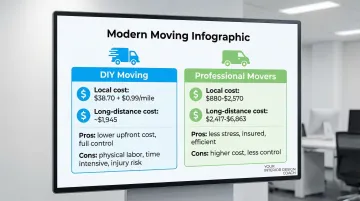
Choose DIY for small, short-distance moves where budget is the priority. Choose professional services for large homes, long distances, or when physical limitations make DIY impractical.
Moving containers offer a middle ground: you pack and unpack, but professionals handle the driving.
Create Your Moving Budget
Build a budget that covers all moving-related expenses:
- Moving services (truck rental or professional movers)
- Packing supplies (boxes, tape, bubble wrap, markers)
- Insurance coverage for your belongings
- Utility deposits and connection fees
- Cleaning supplies for both homes
- 10-15% buffer for unexpected expenses
Set Your Moving Date Strategically
Moving during peak season (late spring to early summer) can cost 20-30% more than off-peak periods because demand outpaces supply and crews get stretched. Schedule your move during fall or winter if possible, and avoid month-end dates when overlapping lease deadlines create a booking crunch.
Coordinate your move date with lease endings or closing dates. Request time off work at least 4-6 weeks ahead to make sure you have availability.
Research and Get Moving Quotes
Contact at least three moving companies or truck rental services to compare pricing and services. Verify each company's credentials, insurance coverage, and recent customer reviews.
Reputable movers should offer virtual or in-person walkthroughs to provide accurate quotes based on actual volume, not rough estimates.
Understand whether pricing is based on estimated weight, cubic footage, or hourly rates to avoid surprises on moving day.
6-4 Weeks Before: Plan Your New Space and Organize
Create a Floor Plan for Your New Home
Before packing a single box, measure every room in your new home, including doorways, hallways, and ceiling heights. Sketch furniture placement to avoid relocating heavy pieces multiple times. Identify which furniture fits and which pieces need to be sold, donated, or left behind.
Consider consulting an interior design professional during this planning phase. If you're feeling stuck figuring out what should go where before the truck arrives, I can help you think through the layout and furniture decisions before moving day becomes more stressful than it needs to be. Reach out for a free consultation at 408-306-5003!
Declutter Ruthlessly
Moving costs often depend on weight and volume, so reducing your load directly lowers expenses. Sort every item into four categories:
- Keep: Items you love and use regularly
- Donate: Usable items you no longer need
- Sell: Valuable items worth the effort to list online or include in a garage sale - every item you sell offsets moving costs and means one fewer box you'll need to unpack at the other end
- Trash: Broken or unusable items
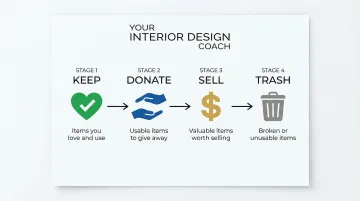
Hold a garage sale or list items on Facebook Marketplace, Craigslist, or OfferUp to offset moving costs. Donated items may also provide tax deductions.
Gather Packing Supplies
Collect boxes in various sizes, bubble wrap, packing paper, packing tape, permanent markers, and color-coded labels. Source free boxes from grocery stores, liquor stores (they have sturdy boxes), bookstores, or through local Buy Nothing groups on Facebook.
Create a Moving Binder
Organize all moving-related documents in one place, either a physical binder or digital folder. Include:
- Moving company quotes and contracts
- Receipts for all moving expenses
- New home documents (lease, deed, HOA rules)
- Utility account numbers and transfer confirmations
- Master inventory list of boxes and contents
- Important contacts (movers, landlords, utility companies)
Notify Important Parties
Update your address with these essential organizations:
- USPS (file a change of address for mail forwarding)
- Banks and credit card companies
- Insurance providers (auto, health, home/renters)
- Subscription services and online retailers
- Voter registration
- Employer and HR department
- IRS and Social Security Administration
- DMV for driver's license and vehicle registration
Schedule Utility Transfers
Arrange for utilities to be disconnected at your current home and connected at your new home on appropriate dates. Contact providers for:
- Electricity and gas
- Water and sewer
- Internet and cable
- Trash and recycling services
Schedule disconnections for the day after you move out and connections for the day before you move in.
3-2 Weeks Before: Pack Strategically
Start Packing Non-Essential Items
Industry experts recommend starting the packing process one to two months before moving, tackling one to two rooms per weekend. Begin with items you won't need immediately:
- Guest rooms and spare bedrooms
- Storage areas (attics, basements, garages)
- Out-of-season clothing and sports equipment
- Holiday decorations and special occasion items
- Books, collectibles, and display items
Keep daily essentials accessible until the final days before your move.
Use a Color-Coding or Numbering System
Assign each room in your new home a color or number, then label boxes accordingly. Write contents and destination room clearly on at least two sides of each box.
Create a master inventory list tracking what's in each numbered box. This makes finding specific items easy without opening every box - and it ends the frustration of hunting through a stack of identical brown boxes for the one thing you need on the first night.
Pro labeling tips:
- Take photos of electronics before disconnecting cables for easy reassembly
- Label boxes on top and sides (visible when stacked)
- Use waterproof markers to prevent smudging
Pack a "First Night" Box
Prepare a clearly labeled essentials box for each family member containing items needed immediately upon arrival:
- Toiletries (toothbrush, toothpaste, soap, shampoo)
- Medications and first aid supplies
- Phone chargers and essential electronics
- Change of clothes and pajamas
- Important documents (IDs, contracts, keys)
- Basic tools (screwdriver, hammer, box cutter)
- Snacks, water bottles, and paper plates
- Pet supplies if applicable

Keep this box in your personal vehicle rather than on the moving truck.
1 Week Before and Moving Day Essentials
Complete Final Packing
Finish packing all remaining items except absolute essentials for your final days:
- Defrost and clean your refrigerator at least 24 hours before moving
- Take photos of your empty space for security deposit documentation
- Set aside cleaning supplies for final cleanup after everything is loaded
- Do a quick check of obvious storage areas for forgotten items
Prepare for Moving Day Logistics
With packing complete, shift your focus to the logistics that make moving day run smoothly. Confirm arrival time with your movers or helpers the day before.
Withdraw cash for tips using these guidelines:
- Local moves: $5-10 per hour per mover
- Long-distance moves: 5-15% of total cost
- Challenging conditions (stairs, heavy items, bad weather) warrant higher amounts
Keep important documents, valuables, and irreplaceable items with you rather than on the moving truck. Have snacks and drinks available for everyone helping with the move.
Conduct Final Inventory Check
As items are loaded onto the truck, verify all boxes and furniture pieces against your inventory list. Do a final walkthrough of your old home, checking every room, closet, cabinet, and outdoor storage area. Take meter readings for utilities if applicable, and leave keys, garage door openers, and any relevant documents for the new occupants.
Settling In: Your First 2 Weeks in Your New Home
Prioritize Unpacking Strategically
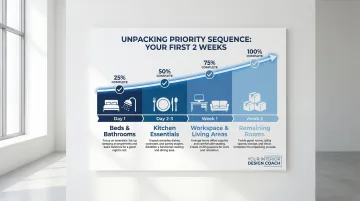
Unpack beds and bathrooms first so you have functional sleeping and hygiene spaces at the end of an exhausting moving day - nothing derails recovery faster than searching boxes for toiletries at midnight. Next, set up kitchen essentials so you can prepare meals at home rather than eating out constantly. Tackle remaining boxes room by room rather than randomly; this creates measurable progress and prevents chaos from spreading across every space at once.
Address Immediate Home Setup Needs
Change locks immediately since previous keys may still be in circulation. Locate shut-off valves for water and gas in case of emergency. Test all smoke and carbon monoxide detectors. Working smoke alarms reduce the risk of dying in a home fire by 60%. Familiarize yourself with the electrical panel location and circuit breaker labels.
Make Your New Space Functional and Beautiful
Unpack and arrange furniture according to your pre-planned layout. If you didn't create a floor plan before moving, now is a good time to think through your space intentionally. Hang curtains or blinds for privacy, add area rugs to define spaces and reduce echo, and start personalizing walls with art and decor.
Feeling stuck on furniture placement or room layout? I can help you figure out what is making the space feel off, whether it’s furniture scale, traffic flow, awkward spacing, or rooms trying to do too many things at once. Sometimes a few layout changes make the whole home feel easier to live in. If you haven’t been able to move things forward, reach out at 408-306-5003 and we can take it from there together.
Explore Your New Neighborhood
Locate essential services nearby: grocery stores, pharmacies, gas stations, urgent care facilities, and hospitals. Introduce yourself to neighbors. They're valuable resources for local recommendations and community information.
Research trash pickup schedules, recycling guidelines, and any HOA rules that apply to your property.
Update Your Home Inventory
Photograph your belongings in their new locations for insurance documentation. Make sure your homeowner's or renter's insurance policy is active and provides adequate coverage. File any damage claims from the move promptly. Most moving companies have specific timeframes for reporting damage.
Your Quick Recap
Moving well is mostly a planning problem, not a logistics problem. The people who move smoothly are not the ones who pack perfectly, they are the ones who made decisions about furniture placement, storage, and decluttering before the truck arrived. The new home sets up faster, the stress is lower, and the space feels intentional from day one.
- Eight weeks of lead time is not overkill - it is the minimum to make good decisions without rushing
- Decluttering before a move reduces both cost and regret; every item you do not move is money saved
- Color-coded packing by room sounds simple and saves hours on the other end
- Creating a floor plan before the movers arrive means nothing gets placed twice
- Moving off-peak can save 20-30% compared to summer weekends - flexibility is a real financial lever (bonus insight)
- The new home setup is an opportunity to plan intentionally; how you set it up first is how it stays for years (bonus insight)
If you're still feeling stuck and haven't been able to move things forward, let's talk! Reach out for a free consultation at 408-306-5003, and we can take it from there.
Frequently Asked Questions
How far in advance should I start planning my move?
Start planning eight weeks before your move date for the best organization and rates. This timeline allows you to compare movers, declutter thoroughly, and pack methodically. If you have less time, even four weeks can work if you stay focused and organized.
What's the most cost-effective way to pack fragile items?
Use towels, blankets, and clothing as padding instead of buying bubble wrap. Pack dishes vertically like records rather than stacked flat, and fill empty spaces with packing paper to prevent shifting. Label all fragile boxes clearly on multiple sides.
Should I hire professional movers or do a DIY move?
The decision depends on distance, budget, physical capability, and time constraints. DIY moves save money but require significant labor, while professional movers reduce stress and include insurance coverage.
How can I save money on my move?
Move during off-peak times (fall or winter) to save 20-30% on costs. Declutter before packing, source free boxes from local stores, and do your own packing to reduce labor costs significantly.
What should I unpack first in your new home?
Prioritize beds and bedding so everyone has a comfortable place to sleep. Set up bathroom essentials next for hygiene needs, then unpack kitchen basics so you can prepare meals at home.
How do I plan furniture placement before moving in?
Measure all rooms and furniture pieces carefully, then create a floor plan sketch or use online room planning tools. Think about traffic flow, natural light, and outlet locations, or work with an interior design coach like YIDC to work through your space planning from the start.
