Limited square footage doesn't have to mean limited potential. With smart design choices, even a 40-square-foot bathroom can feel open, functional, and surprisingly comfortable.
In my experience, small bathrooms are actually design opportunities in disguise. Every decision carries weight, every inch matters, and when you get it right, the transformation is dramatic. This guide walks you through 15 practical ideas to make the most of the space and create a bathroom that feels twice its actual size.
Your Quick Summary
- Light colors, oversized mirrors, and strategic lighting expand perceived space
- Wall-mounted fixtures and vertical storage free up floor space while maintaining functionality
- Large tiles and frameless glass showers create uninterrupted visual flow
- Smart layout and fixture placement matter more than actual square footage for comfort and usability
- Expert guidance prevents layout mistakes that cost thousands to fix later
15 Smart Small Bathroom Design Ideas for Maximizing Space
Use Large-Format Tiles to Create Visual Continuity
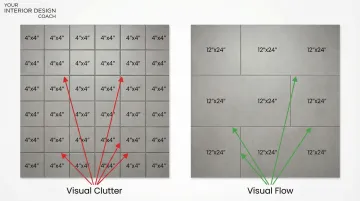
Grout lines fragment your floor and walls into a busy grid. The more lines, the more visual clutter, and the smaller your bathroom feels.
Large-format tiles solve this by creating seamless surfaces that let the eye travel uninterrupted - which is why they make small bathrooms feel larger even without changing the room's dimensions. The Tile Council of North America defines large-format tile as having at least one edge greater than 15 inches. For small bathrooms, 12x24-inch tiles or larger deliver excellent results. Fewer grout lines mean:
- Less visual interruption
- Easier cleaning (fewer grout joints to scrub) - this alone saves meaningful time on every bathroom clean
- A more modern, streamlined aesthetic
- The illusion of expanded square footage
Pro tip: Use rectified tiles with narrow grout joints (1/16 inch) to maximize the seamless effect. Match your grout color to the tile to further minimize the grid pattern.
If you're stuck on which tile approach works best for your specific bathroom, a free consultation at 408-306-5003 can help you make the right call before you commit to anything.
Install a Wall-Mounted (Floating) Vanity
Floating vanities create breathing room by mounting the cabinet 8-12 inches off the floor, which exposes more floor surface and tricks the eye into perceiving a larger space. The continuous floor line is what does the visual work - interrupt it with a traditional pedestal or full-base vanity, and that effect disappears. You also gain easier cleaning access and flexibility in mounting height. In my experience, the visible floor line is what makes a bathroom feel like a considered design rather than a builder default.
Standard floating vanities range from 24-60 inches wide and 18-21 inches deep. For tight spaces, opt for an 18-inch depth to preserve walkway clearance while still providing essential storage.
Embrace Floor-to-Ceiling Mirrors
Mirrors are the oldest trick in the small-space playbook, and they work. A strategically placed mirror reflects light and views, effectively doubling the visual depth of your bathroom.
Place a full wall mirror opposite a window to maximize impact. An oversized statement mirror adds personality while expanding space. Or choose a medicine cabinet with mirrored front to combine storage with reflection.
The National Kitchen & Bath Association recommends positioning the bottom edge of your mirror no higher than 40 inches above the floor to accommodate various eye levels. For maximum effect, choose a mirror that's the same width as your vanity or slightly wider.
Choose a Glass Shower Enclosure Over Curtains
Shower curtains chop your bathroom into smaller visual sections because they block sightlines from wall to wall. Glass enclosures allow the eye to travel the full width of the room uninterrupted - which is what makes frameless enclosures create such a strong illusion of spaciousness. The spatial impact is dramatic enough to justify saving for glass even in budget renovations.
2025 pricing ranges:
| Option | Cost | Visual Impact |
|---|---|---|
| Frameless glass | $2,000-$4,000+ | Most open feel, thicker glass |
| Semi-frameless | $1,200-$2,500+ | Good balance of cost and aesthetics |
| Curtain | $10-$50 | Cheapest but visually closes off space |
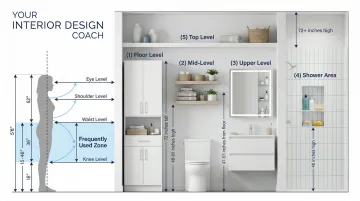
Go Vertical with Storage Solutions
When floor space is limited, look up. Vertical storage draws the eye upward, emphasizing ceiling height while keeping clutter off counters and floors.
Consider these vertical solutions:
- Tall linen cabinets (floor to ceiling)
- Floating shelves above the toilet
- Ladder-style storage racks
- Recessed shower niches built into wall cavities
- Medicine cabinets that use wall depth
According to NKBA guidelines, store frequently used items between 15 and 48 inches above the floor for easy access. Reserve higher shelves for occasional-use items like extra towels or seasonal décor.
Opt for a Corner Sink or Pedestal Sink
Compact sinks free up precious square footage in tight quarters. While they sacrifice storage, the spatial gain often outweighs the tradeoff, particularly in powder rooms or half baths.
Dimensions to consider:
- Pedestal sinks: 18-24 inches wide, 14-20 inches deep
- Wall-mounted sinks: 15-24 inches wide, 12-18 inches deep
- Corner sinks: 16-24 inches along each wall
Pair your compact sink with a recessed medicine cabinet or floating shelf to compensate for lost storage. The visible floor space you gain makes the room feel significantly more open.
Install Pocket Doors or Barn Doors
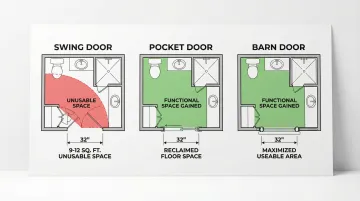
Traditional swing doors consume 9-12 square feet of clearance, space you can't use for fixtures or movement.
Pocket doors slide into the wall cavity. Barn doors slide along the wall surface. Both reclaim that entire swing arc for functional use.
NKBA recommends a minimum 32-inch clear door opening. Pocket doors require wall cavity space (not suitable for all walls). Barn doors need wall space beside the opening for the door to slide.
If your bathroom door swings inward and hits the toilet or vanity, switching to a pocket or barn door can be transformative. Working with an interior design coach, many people find this simple swap creates surprising amounts of usable space.
Use Light, Neutral Color Palettes Strategically
I usually recommend lighter colors when a bathroom feels dark or closed in because they help bounce light around the room. You should look for colors with a Light Reflectance Value above 65, since they tend to work better in small bathrooms where you want the space to feel brighter and more open.
Adding personality: Use your neutral base as a canvas, then add character through:
- Textured tiles (subway, hexagon, or patterned)
- Natural wood accents
- Bold hardware finishes (matte black, brushed brass)
- One accent wall in a deeper tone
Avoid dark colors on all surfaces, which absorb light and shrink visual space.
Incorporate Recessed Lighting and Layered Illumination
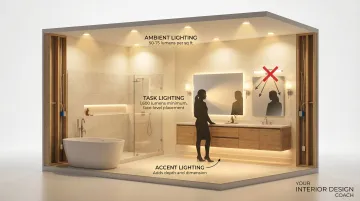
Poor lighting creates shadows that make small bathrooms feel cramped and cave-like. Proper illumination opens up the space and improves functionality.
Popular choices include crisp whites and off-whites, soft grays, pale blues and seafoam greens, and warm beiges and taupes.
Layer three types of lighting:
- Ambient lighting: Recessed ceiling cans providing overall illumination (50-75 lumens per square foot)
- Task lighting: Sconces or vanity bars at face level for grooming (minimum 1,600 lumens)
- Accent lighting: Backlit mirrors or toe-kick lights for depth
The American Lighting Association recommends 1,600 lumens for vanity task lighting. Space recessed cans by dividing your ceiling height by two (4.5 feet apart for 9-foot ceilings).
Critical placement tip: Never place recessed lights directly over the vanity. They cast unflattering shadows on your face. Use side-mounted sconces instead.
Choose a Compact Soaking Tub or Tub-Shower Combo
You don't have to sacrifice a tub just because your bathroom is small. Compact models deliver the soaking experience in a tighter footprint.
Compact tub options:
- Japanese soaking tubs: 39-47 inches long (shorter but deeper)
- Corner tubs: Use dead corner space efficiently
- Alcove combos: Standard 60x30-inch footprint with shower capability
NKBA recommends 30 inches of clear floor space along the tub length for safety and comfort. If you're choosing between a tub and shower, consider that 55% of industry experts say homeowners prioritize enlarged showers over tubs in primary bathrooms, though keeping one tub in the home aids resale value.
Install Open Shelving Instead of Bulky Cabinets
Closed cabinets feel heavy and visually consume space. Open shelving creates a lighter, airier feel while still providing storage.
Keep your open shelves curated. Limit to 2-3 shelves to avoid clutter. Use matching baskets or containers for a cohesive look. Display only what you use regularly or what looks intentionally styled.
Maintain a consistent color palette: all white towels with natural wood accessories creates visual calm. Open shelving suits frequently accessed items. Reserve closed storage (medicine cabinet, under-sink) for less attractive necessities.
Use One Continuous Material or Pattern
Visual breaks fragment space. Continuous materials create flow, making your bathroom feel larger and more cohesive.
Try these approaches:
- Extend the same floor tile into the shower (curbless design)
- Run wall tiles from floor to ceiling without a chair rail break
- Use the same tile throughout (floor and walls)
- Match grout color to tile for seamless appearance
Continuous flooring and wall treatments eliminate visual fragmentation, allowing the eye to travel uninterrupted across surfaces.
Add a Statement Mirror or Light Fixture
One bold, eye-catching element draws attention and creates a focal point that distracts from limited square footage. This design trick shifts focus from size to style.
Statement options:
- Oversized round mirror with dramatic frame
- Geometric or uniquely shaped mirror
- Sculptural pendant light or chandelier
- Striking sconce pair in an unexpected finish
The key is one statement piece. Multiple bold elements compete for attention and create visual chaos in a small space.
Maximize Natural Light with Window Treatments
If the bathroom has a window, I’d try to preserve as much natural light as possible. The idea is to maintain privacy without blocking the one element that instantly makes the space feel brighter, larger, and more open.
These solutions preserve light while protecting privacy:
- Frosted or textured window film
- Top-down/bottom-up cellular shades
- Sheer curtains in light fabrics
- Plantation shutters with adjustable louvers
Install Sliding or Built-In Storage Solutions
Built-in storage uses wall depth without protruding into your room. These solutions maximize every available inch.
Built-in options:
- Recessed medicine cabinets (3.5-4 inches deep, fitting standard wall cavities)
- In-wall toilet paper holders
- Shower niches for toiletries
- Slide-out organizers under the sink
- Recessed towel bars
Position the medicine cabinet bottoms 47-53 inches from the floor for optimal accessibility. Built-ins keep your main footprint clear while providing essential storage.
If you’re looking at your bathroom and still feel stuck on whether the real issue is the layout, storage, lighting, or finishes, let’s talk. Reach out for a free consultation at 408-306-5003, and we can take it from there.
How to Prioritize Which Ideas to Implement
Not every bathroom needs every solution. I usually recommend starting with the one thing that frustrates you most day to day, whether that’s storage, lighting, layout, or how cramped the room feels.
Assessment questions:
- Is storage your primary issue? Prioritize vertical solutions, floating vanities with drawers, and built-in niches
- Does the space feel dark and closed in? Focus on lighting upgrades, mirrors, and glass enclosures
- Awkward layout? Consider fixture replacement (corner sink, wall-mounted toilet) or door changes
Budget considerations:
Mid-range bathroom remodels deliver the strongest ROI at approximately 74%, significantly outperforming upscale renovations (42-45% ROI).
High-impact, lower-cost updates include:
- Paint and lighting: $500-$1,500 for dramatic visual impact
- Mirror upgrade: $200-$800 for instant space expansion
- Floating shelves: $100-$400 for added storage and style
Bigger investments like tile work, fixture replacement, and glass enclosures usually run $5,000-$15,000 but transform both function and value.
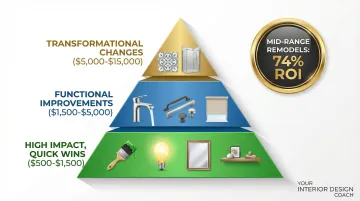
Phased approach: If you can't tackle everything at once, an interior design coach can help you make sure the first choices don’t limit what you can do later. Your paint, lighting, and mirror should still work if you decide to change the tile, fixtures, or storage down the road.
Common Small Bathroom Mistakes to Avoid
Choosing Fixtures That Are Too Large
An oversized vanity or bulky toilet consumes precious clearance space. NKBA recommends 30 inches of clear space in front of all fixtures for comfortable use, but code minimums allow just 21 inches, which feels cramped.
To select appropriately scaled fixtures:
- Choose compact elongated toilets (28 inches deep vs. 31 inches standard)
- Select vanities 18 inches deep instead of 21-24 inches
- Consider wall-hung toilets that visually free up floor space
Measure your space carefully and prioritize appropriately scaled pieces over standard sizes.
Over-Cluttering with Décor and Accessories
Small spaces demand careful selection. Every item should serve a purpose or bring intentional beauty.
Common clutter sources include:
- Too many decorative objects on open shelves
- Mismatched towels and accessories
- Excessive wall art or signage
- Countertop items that could be stored away
Keep surfaces clear, use matching storage containers, and embrace the "less is more" philosophy. This discipline becomes especially important in bathrooms under 50 square feet.
Poor Lighting Choices
A single overhead light creates harsh shadows and makes your bathroom feel smaller and less functional. The most common mistakes include relying only on recessed downlights (which cast shadows on faces), skipping task lighting at the vanity, and choosing bulbs with the wrong color temperature.
Warm yellow (below 3000K) can make small spaces appear dingy, while cool white (above 5000K) feels overly clinical. Layer your lighting with ambient, task, and accent sources, and use 3000-4000K bulbs for a natural, flattering glow.
Your Quick Recap
Small bathrooms punish bad decisions faster than any other room. Every choice has a ripple effect - the wrong tile makes the floor look busy, the wrong vanity blocks the door, the wrong lighting shrinks the whole space. But that same tight constraint means a few smart changes can transform how the room feels completely.
- Light colors and large tiles do not just look better - they measurably increase perceived space
- A glass shower enclosure is often worth saving for; it changes the whole room's feel
- Removing visual clutter is free - start there before spending anything
- Lighting at face level matters more than overhead lighting; most bathrooms get this backwards
- The fixture swap with the highest ROI is usually the vanity light, not the vanity itself (bonus insight)
- If you are renting, frameless mirrors and strategic lighting alone can make a dated bathroom feel current (bonus insight)
When you are ready to take the next step and want expert guidance on your specific bathroom layout, design drafting services can turn your ideas into a plan you can actually build from.
If you're still feeling stuck and haven't been able to move things forward, let's talk! Reach out for a free consultation at 408-306-5003, and we can take it from there.
Frequently Asked Questions
Is $10,000 enough for a bathroom remodel?
A $10,000 budget covers a modest refresh with new fixtures, paint, lighting, and vinyl flooring. Full remodels with tile work and plumbing changes typically run $15,000-$25,000.
Is 10x10 big enough for a bathroom?
A 10x10 bathroom (100 square feet) is quite spacious. Most full bathrooms average just 40-50 square feet. You'll have plenty of room for a separate tub and shower, double vanity, and toilet.
What is the golden rule for bathroom layouts?
Maintain proper clearances: NKBA recommends 30 inches of clear space in front of all fixtures and at least 15 inches from the toilet centerline to side walls. Create logical flow between the three main zones (toilet, sink, shower/tub).
How can I make my small bathroom look luxurious?
Invest in quality materials even in small quantities: natural stone, high-end fixtures, and quality lighting elevate the space. Create cohesion with a unified color palette and add one statement element (mirror, light fixture, or accent tile) as a focal point.
What's the best flooring for a small bathroom?
Large-format porcelain or ceramic tiles (12x24 inches or larger) minimize grout lines and create visual continuity. Luxury vinyl plank (LVP) offers 100% waterproof performance at a lower cost. Extend the same flooring into your shower area (curbless design) to maximize the visual floor plan and eliminate breaks.
Should I choose a bathtub or shower for a small bathroom?
55% of homeowners prioritize walk-in showers over tubs, and a spacious shower visually opens small spaces. Keep at least one tub in your home for families and resale value, or choose a tub-shower combo for both functions.