A short-term rental has a broader role: it needs to feel visually compelling to strangers online while still creating an atmosphere guests instantly connect with in person. The design is not just being experienced physically anymore; it is also being judged through listing photos, social media shares, and first impressions formed in seconds.
What I’m noticing in 2026 is a stronger move toward rentals that feel curated rather than heavily themed. Guests are gravitating toward interiors that feel warm, layered, and aesthetically memorable without becoming visually exhausting. There is a growing preference for natural textures, sculptural furniture, softer lighting, earthy palettes, boutique-hotel influences, and spaces that feel emotionally calming rather than overly styled for trends alone.
In this guide, we’ll explore the short-term rental design trends shaping 2026, along with practical ideas that help rentals feel more elevated, inviting, and visually distinctive for modern guests.
Your Quick Summary
- Biophilic design and spa-like bathrooms drive 18-23% higher ADR
- Smart home tech now essential as 61% of guests take workations
- Hyper-local design boosts click-through rates 22% in competitive markets
- Multi-functional spaces capture surging demand (46M nights for 28+ day stays)
- Sustainability sways 45% of booking decisions, especially travelers under 45
Biophilic Design & Wellness-Centered Spaces
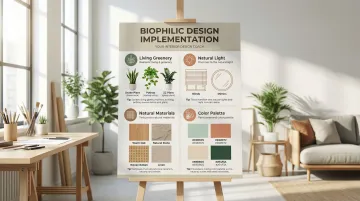
Biophilic design in 2026 is becoming less about simply adding plants to a room and more about shaping an environment that feels grounding, sensory, and emotionally restorative. In interior design, biophilic spaces are usually created through a layered combination of natural light, organic textures, tactile materials, earthy color palettes, softened edges, natural ventilation, and stronger visual connections to nature. The goal is not to make the space look “eco-friendly,” but to influence how guests physically and emotionally respond to the environment the moment they enter it.
What I’m seeing across higher-performing rentals is a growing shift toward spaces that feel slower, quieter, and more calming visually. Guests are increasingly drawn to interiors that reduce overstimulation and create a stronger sense of retreat, especially in urban destinations where travelers are often looking for contrast from the pace of everyday life. Materials like lime-wash walls, unfinished woods, linen textiles, stone finishes, ambient lighting, indoor greenery, and spa-inspired bathrooms are becoming more prominent because they create a softer and more immersive atmosphere both in listing photos and in person.
In short-term rentals especially, wellness-centered design has become closely tied to perceived luxury.
Specific elements to consider:
- Replace synthetic bedding with washed linen or cotton layers in warm neutral tones
- Use warm 2700K lighting through bedside lamps, sconces, and dimmable fixtures
- Incorporate natural finishes like oak wood, travertine, limewash, or textured stone decor
- Add larger statement greenery like olive trees, rubber plants, or hanging pothos near windows
- Style bathrooms with rolled towels, wood stools, eucalyptus, and soft ambient lighting for a spa-like feel
Smart Home Integration & Seamless Tech Experiences
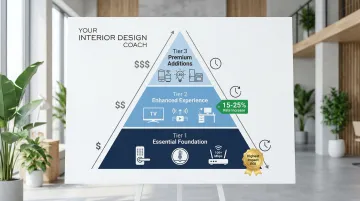
Smart home technology in STRs has evolved from novelty to baseline expectation. Guests now filter searches by smart home features, if your property doesn't appear in those results, it doesn't compete.
61% of STR guests report taking a "workation" trip, and tech-savvy travelers specifically filter for smart home features and dedicated workspace amenities.
Most impactful smart features:
- Keyless entry: Unique codes for each guest simplify check-in and improve security
- Smart thermostats: Guest-controlled climate via app improves comfort and reduces energy costs
- Streaming-capable smart TVs: Major platform access (Netflix, Hulu, Disney+) is a baseline expectation
- High-speed WiFi: Minimum 100 Mbps is essential for remote workers
These tech features support the growing workspace trend. Properties with well-designed work areas command 15-25% higher rates and see increased midweek occupancy.
If you're uncertain how to balance tech upgrades with your overall design vision, working with an interior design coach can help you make strategic choices that improve both functionality and the guest experience.
Hyper-Local & Authentically Placed Design
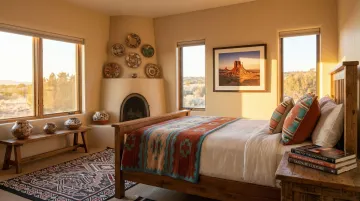
Hyper-local design creates spaces deeply connected to their specific location through art, materials, colors, and cultural elements. This is the opposite of the generic "Airbnb aesthetic" that saturates markets.
Why Authentic Local Character Matters
In oversaturated markets, authentic local character is what separates a booking from a scroll-past. Properties featuring local elements in their top five photos see 22% higher click-through rates - because visual proof of local connection is what experience-seeking travelers are actually looking for, and they book longer stays when they find it.
Here's how to bring this trend to life with elements that tell your location's story:
- Local art: Commissioned photography or paintings from regional artists
- Regional color palettes: Desert tones in Arizona, coastal blues in New England, forest greens in the Pacific Northwest
- Locally-made textiles: Handwoven throws, regional pottery, area-specific crafts
- Curated guidebooks: Local favorites bookshelf with coffee table books about the region
Sourcing Authentic Local Elements
Visit local art fairs and maker markets rather than big-box stores, and partner with nearby artisans for custom pieces that tell a story. Use paint colors that echo the natural environment visible from your windows; this creates visual continuity between interior and exterior.
Flexible Multi-Functional Spaces for Extended Stays
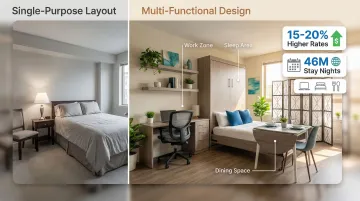
Today's guests expect spaces that adapt to their lifestyle. Bookings for 28+ days surged from 20 million nights in 2019 to 46 million by the end of 2025, making "workation" and month-long stays standard patterns.
This shift means your rental must serve multiple purposes: workspace, dining area, relaxation zone, and sleeping quarters.
Design Elements That Maximize Functionality
One thing I pay close attention to in short-term rentals is whether the space can shift naturally between different uses throughout the day. A guest might use the same area for coffee in the morning, remote work in the afternoon, dinner at night, and relaxation afterward. The layout and furniture need to support those transitions without constantly needing to be rearranged or feeling visually cramped.
Key features that work well for extended-stay guests:
- Real sofa beds with quality mattresses, not thin futons that compromise comfort
- Drop-leaf or extension tables that work for both solo meals and laptop setups - guests who can work and eat at the same surface without feeling like they're making do are far more likely to extend their stay
- Dedicated workspace with ergonomic chair, task lighting, and desk positioned near natural light and outlets
- Murphy beds or folding screens in studios to create distinct privacy zones
These design choices directly affect your bottom line. Multi-functional layouts bring in families, remote workers, and longer-stay travelers, and can justify 15-20% higher rates by accommodating more use cases within the same footprint.
Cleverly designed smaller spaces often outperform larger ones on a revenue-per-square-foot basis when they make good use of the space they have.
Sustainable & Eco-Conscious Design Mandates
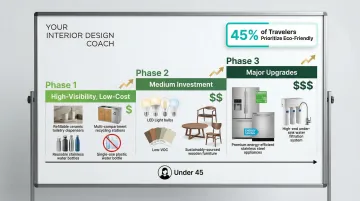
Sustainability is no longer optional. With 45% of travelers prioritizing eco-friendly accommodations - especially guests under 45 - ignoring this trend means losing your most valuable long-stay segments to competitors who communicate it clearly. Properties that highlight eco-features see improved conversion precisely because these guests are willing to pay premium rates for alignment with their values.
Implementing Visible Sustainability
Focus on changes guests can see and experience during their stay:
- Low-VOC paints and finishes
- Energy-efficient appliances and LED lighting throughout
- Vintage or sustainably-sourced furniture with character
- Refillable toiletry dispensers instead of single-use bottles
- Visible recycling stations with clear labeling
- Reusable water bottles and filtered water systems
What I've seen with clients is that many hosts struggle with which eco-upgrades deliver the best return. Working with an interior design coach helps you prioritize investments that appeal to your target guest demographic while staying within budget. Start with high-visibility, low-cost changes like eliminating single-use plastics, then phase in larger investments like energy-efficient appliances as you renovate.
If you're still feeling stuck on which upgrades make the most sense for your property, reach out at 408-306-5003, a free consultation can help you prioritize with confidence.
What's Driving These Short-Term Rental Design Trends in 2026
Four key forces are reshaping short-term rental design:
- Evolved traveler priorities: Post-pandemic travelers prioritize wellness, authentic experiences, and spaces that support both work and leisure. Design must address these needs to remain competitive in a market where travel has become "intentional, emotional, and experience-led".
- Algorithm influence: Booking platforms increasingly prioritize listings with specific amenities in search algorithms. Properties featuring smart home features, dedicated workspaces, and eco-friendly practices gain visibility advantages that directly drive bookings.
- Oversupply challenge: With STR inventory growth outpacing demand in many markets, only properties offering distinctive, well-designed experiences command premium rates and maintain high occupancy. U.S. STR occupancy is expected to ease by 1% in 2026 as the market continues balancing supply and demand.
- Booking behavior shifts: Guests are booking closer to arrival dates, with U.S. booking windows shortening from 19 days in 2022 to 15 days in 2025. This compressed timeline means your listing photos and design elements must make an immediate, compelling impression.
How These Design Trends Impact Short-Term Rental Hosts
Putting these trends into practice isn't just about aesthetics; it directly affects operational metrics, guest satisfaction, and profitability.
Operational & Guest Experience Impact
Properties incorporating these trends see measurably higher review scores (4.8+ average), reduced guest friction with fewer questions and issues, and increased repeat booking rates.
High-quality photos and consistent design are direct revenue drivers, while listings with weak visual content lose visibility and bookings.
Business & Revenue Impact
Design improvements deliver measurable financial returns:
| Impact Area | Performance Gain | Source |
|---|---|---|
| Average Daily Rate (ADR) | 10-25% increase (standout projects: 40-60%) | ReImagine Home AI |
| Total Revenue | Up to 40% increase vs. standard properties | Breezeway |
| Occupancy Rate | 10-15% improvement | Industry data |
| Time Between Bookings | Reduced vacancy periods | Industry data |
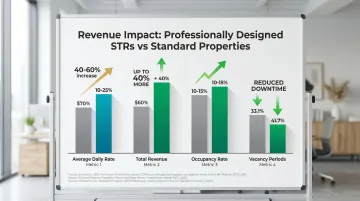
These numbers represent real revenue potential. Yet many hosts struggle with a critical challenge: knowing which design investments will actually deliver these results.
The confidence gap is real. Hosts feel overwhelmed by design decisions and unsure which changes matter most for their specific property and market. Expert guidance helps translate trend awareness into revenue-focused choices. With nearly 20 years of experience, YIDC helps Airbnb and Vrbo hosts identify design elements that align with their target guests and market position.
Future Signals: What's Next for STR Design Beyond 2026
AI-Assisted Personalization
61% of STR operators used AI in 2025, with adoption higher among larger operators. The next frontier includes:
- Smart systems that learn individual guest preferences
- Automated lighting and temperature adjustments
- AI-powered local recommendation systems tailored to guest interests
Airbnb is launching AI-powered search features that allow users to describe their ideal property using natural language. Detailed listing copy and distinctive design elements now directly affect search visibility.
The Experience Economy Evolution
While AI improves the digital booking journey, physical spaces must deliver memorable experiences guests can't replicate at home.
Properties gaining traction feature experience-driven amenities:
- Outdoor pizza ovens for culinary experiences
- Cold plunge pools for wellness rituals
- Recording studios for creative pursuits
- Art studios for hands-on activities
Design must create memorable moments, not just comfortable spaces.
Accessibility & Inclusive Design
Properties incorporating universal design principles tap into underserved markets while standing out in their positioning:
- Zero-threshold showers for barrier-free access
- Wider doorways accommodating mobility devices
- Adjustable-height counters and fixtures
- Clear sightlines and intuitive layouts
These features expand your potential guest base while future-proofing your property.
Your Quick Recap
Most hosts think about design as a one-time setup. The hosts who consistently outperform think about it as an ongoing revenue signal. The trends in this article are not just aesthetic directions - they are what the booking algorithm increasingly rewards. Guests have more choices than ever, and they filter fast.
- Your listing photos are the first filter; design is the second - both must work together
- Smart tech is now table stakes, not a differentiator - missing it costs you guests
- Hyper-local design makes your property unsearchable by competitors and unforgettable to guests
- Sustainability is not optional with younger high-value travelers - they filter for it
- One well-executed trend beats five half-done ones every time when it comes to reviews
- Refreshing your listing photos after a design upgrade can lift bookings before your next guest arrives (bonus insight)
- Extended-stay bookings are growing fast - multi-functional layouts capture that demand without extra cost (bonus insight)
If you're still feeling stuck and haven't been able to move things forward, let's talk! Reach out for a free consultation at 408-306-5003, and we can take it from there.
Frequently Asked Questions About Short-Term Rental Design Trends
What design elements have the biggest impact on short-term rental bookings in 2026?
Biophilic elements, smart home features (keyless entry, smart thermostats), and hyper-local authenticity drive the highest booking conversion. Spa-like bathrooms generate 18-23% ADR increases when featured prominently in listing photos.
How much should I budget for updating my short-term rental design?
Budget $3,000-$15,000 depending on property size. Strategic investments in high-impact areas (entry, living room, primary bedroom, bathrooms) deliver better returns than complete overhauls, with light refreshes yielding 10-20% ADR bumps.
Do I need to hire an interior designer for my Airbnb or Vrbo property?
A specialized STR design coach like YIDC provides strategic guidance at a fraction of full-service designer costs. This approach helps you make confident decisions yourself while building skills for future updates.
Which smart home features are most important for vacation rentals?
Prioritize smart locks, smart thermostats, and reliable high-speed WiFi (minimum 100 Mbps) as your essential foundation. These three deliver the highest guest satisfaction before adding voice-controlled lighting or other extras.
How can I make my short-term rental design feel local and authentic?
Source art and decor from local makers and art fairs rather than big-box stores. Use regionally-inspired color palettes that echo your area's natural landscape. Create curated local guidebooks featuring neighborhood favorites, and incorporate materials that reflect the region's character and cultural heritage.
Is sustainable design really important to short-term rental guests?
Yes, 60-70% of travelers under 45 consider eco-friendly practices when booking. Properties highlighting sustainability see improved conversion among high-value, longer-stay guests. The key is putting visible measures in place - like refillable toiletries, energy-efficient appliances, and recycling stations - without sacrificing comfort or convenience.