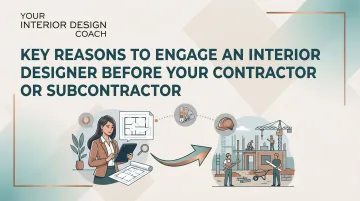
It's not a great position to be in, but I have good news! In most cases, it's entirely avoidable.
Without a clear plan in place before construction starts, even if you've hired an architect, contractor bids typically stay vague, material decisions get rushed, and you end up locked into choices that cost real money to undo. At the very least, your chances of having a change order and going over budget increase drastically.
People who plan ahead and bring a home design consulting expert in first have a noticeably smoother experience. Not just aesthetically, but practically, financially, and emotionally. Considering every detail ahead of time gives you the space to make decisions at your own pace, without a full team waiting on you, feeling rushed, or causing construction delays. Once construction starts, that flexibility disappears quickly. When it comes to remodels there will always be unexpected curve balls, so knowing what you want ahead of time lowers the amount of stress you will be under when those curve balls come up.
This article walks through exactly why planning and design details matters, and what it actually protects you from.
Your Quick Summary
- An incomplete design scope is a primary driver of change orders, which push up both cost and timelines.
- Change orders increase project costs by 4–5% on average and can reach up to 15% (American Institute of Architects).
- Construction sequencing, plumbing, electrical, and finishes depend on finalized layout and material decisions. When one causes a delay, the rest are automatically impacted.
- Unresolved decisions during construction are one of the leading causes of project delays.
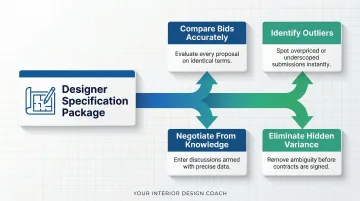
- Early design documentation creates a defined scope, which leads to more accurate contractor pricing and far less cost variability.
What Does an Interior Designer Actually Do Before Construction?
The pre-construction phase tends to be the most misunderstood part of the whole process. From the outside, it can look like choosing colors and textures. What's actually happening is that I'm translating your vision into something builders can execute: clearly, completely, without having to fill in gaps themselves.
When contractors have to make assumptions, that's usually where things start going sideways. A clear set of decisions and documents removes that entirely.
Here's what that preparation typically covers:
Layouts & Space Flow: Locking in exact dimensions early means the layout is intentional, not incidental. It's how you avoid those "make it fit" moments where a sofa feels cramped or a walkway is awkward because the walls weren't positioned with the final use in mind.
Lighting & Electrical: Mapping out all lighting details, outlets, and switch locations in advance means everything is exactly where you'd naturally reach for them. It's also the difference between a beautiful wall and a beautiful wall with a poorly placed light switch right in the middle.
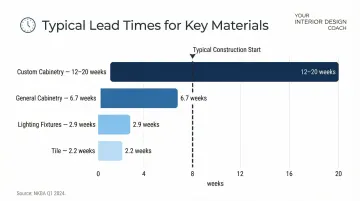
Material Schedules: Every finish gets defined: tile layouts, grout color & size, door hardware, flooring, paint color & sheen, all of it. This stops placeholder materials from being used and makes sure everything is ordered and ready before it's needed. So your timeline isn't impacted waiting on a decision that could've been made weeks earlier.
Once these decisions are clearly defined, it becomes much easier to see why the timing of when a designer is involved makes such a difference. Even if you've hired an architect, many times their plans do not account for all interior or exterior design details. Ultimately you'll most likely be asked urgent questions by your custom home construction team when you are mid construction, leaving you scrambling for readily available and much more limited options.
What Happens When You Don't Hire an Interior Designer Before Your Contractor
Building your home should feel like a creative progression, not a series of high-stakes compromises made under pressure. In my experience, clients who've had the time to think through these decisions before construction starts feel far more at ease during the build. Nothing feels reactive, because everything's already been considered.
This is what tends to happen when that step is skipped.
1. Pricing feels unclear because there are no defined decisions
I've seen this happen often. A quote comes in, it looks reasonable, and then slowly the numbers start to change.
It usually comes down to allowances. When materials and finishes aren't selected upfront, contractors use placeholder estimates. When the actual selections come in later, the cost adjusts. That's not overcharging, it's the natural result of pricing something that wasn't fully defined.
And because those adjustments get processed as change orders, they don't just affect the number; they affect how the entire project moves forward.
Data from the American Institute of Architects shows that change orders increase project costs by around 4–5% on average, and in some cases can reach 15%. On most projects, that's not a small line item.
When everything is specified before the first quote is issued, the pricing reflects real decisions, not placeholders. You know exactly what you're committing to, and the budget stops feeling like a moving target.
When it comes to home remodeling, there will always be unexpected surprises. That's the nature of working with an existing building. So why not have everything else figured out early so you only have to deal with those truly urgent problems you couldn't plan for?
Reason 2: Decisions get pushed to build phase
Once construction starts, things move fast. The questions don't slow down to match your pace; they come in back-to-back, often while something else is already being built around you.
Where should this light go? What tile are we using? Are we finalizing this layout?
There's also a practical sequencing issue here:
- Plumbing depends on layout
- Electrical work depends on lighting placement
- Finishes depend on what's already been installed
When those decisions haven't been made in advance, work either pauses or gets adjusted, and adjusted work usually costs more.
I've seen projects where materials arrived late or had to be substituted on the spot just to keep things moving. When the design is worked through early, everything gets considered. The layout supports how the space will actually be used. The materials work with each other. The details don't need to be revisited. You walk in at the end, and it feels settled, like it was always supposed to look this way.
If you're at the early stages, establishing this clarity upfront can make a meaningful difference. I offer home improvement consultations for those looking to think this through before construction begins. Schedule a quick call with me to get started.
How to Make the Most of Early Designer Involvement
The earlier design decisions get resolved, the more room there is to adjust layouts, materials, and details without touching cost or timeline. Once permits are submitted or structural work has started, those same changes become significantly more expensive and disruptive.
You Don't Need a Full Design Engagement to Start
Early involvement doesn't have to mean a long-term contract. Even a focused pre-construction consultation or planning session can produce a specification document, a space plan, or a set of drawings that gives contractors enough to produce an accurate bid and proceed confidently.
YIDC is structured to support exactly this: focused consultations that get your layout defined, your materials specified, and your scope documented before a contractor ever prices the job. For clients with extremely limited budgets, even having a YIDC list of decisions you need to make will set you up for the best construction success. You can always reach out during construction for an emergency consultation before making any changes or approvals if work doesn't appear to be going in a direction you feel comfortable with.
What to Ask for When You Bring in a Designer Early
You don't need everything figured out before that first conversation. But a few things, worked out early, make a significant difference to how the rest of the project goes.
1. A Defined Space Plan
This is where layout, movement, and functionality are worked out. Designers ensure that how you live in the space aligns with how it's built, not the other way around.
2. A Clear Direction for Materials and Finishes
From flooring to cabinetry, early material decisions help avoid last-minute substitutions and delays. Designers typically specify finishes in advance so contractors can order and plan accordingly.
3. Drawings That Contractors Can Build From
Interior designers produce plans, layouts, and technical drawings that communicate exact placements and details to trades. This reduces guesswork and keeps execution aligned with the original vision.
These three things alone can change how the entire project runs, and they're all figured out before a single wall goes up.
Your Quick Recap
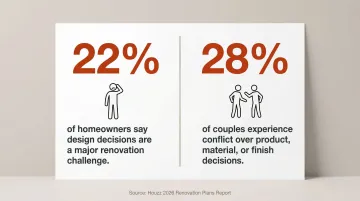
The order in which things happen makes more of a difference than most people expect going in. Bringing in a designer before a contractor isn't about adding a step; it's about making sure the steps that follow are worth taking.
When that clarity is missing, you often end up paying for it in mid-build compromises, reactive or uninformed decisions, and changes that could have been avoided entirely. Your designer fee is modest compared to what those corrections cost, and the difference between you getting a design you love or not.
What's the one area of your project that feels overwhelming or uncertain right now? That's usually the right place to start. Reach out to me at 408-306-5003, and we can walk through it together.
Frequently Asked Questions
Do I hire an architect first or a builder first?
For most projects, an architect handles structural design while an interior designer handles the interior space, finishes, and livability, and both should be engaged before a builder. For renovation projects without major structural work, an interior designer alone may be the right first call.
How do I know if my budget is realistic for a renovation or build?
Build costs vary widely by location, size, materials, and finish level. Without knowing what's been selected, any number can look reasonable on paper and still fall short once construction begins. This is exactly the kind of question a designer can help clarify early, by aligning your selections with a realistic budget before a contractor is ever engaged.
When is it too late to hire an interior designer during a renovation?
It's never too late to consult with an interior designer. However, the earlier you bring one in, the better. Once structural work and mechanical rough-ins are complete, design options can be more limited, and reversing decisions gets expensive fast. A designer is most valuable before those phases begin, when your options are still open. That being said, Your Interior Design Coach is well versed in construction sites and creatively thinking through mid-construction challenges. With an emergency consultation, many times you can get a design you want within the limitations your mid construction surprises.
What does an interior designer do that a contractor can't?
Contractors execute construction; designers plan how a space will look, function, and feel, specifying materials, finishes, layouts, and lighting around your lifestyle and vision, not just what's structurally possible. That planning ensures your contractor builds what you actually want.
Can I hire an interior designer for just the pre-construction planning phase?
Yes. Many designers, including YIDC, offer focused planning consultations or specification support without requiring a full-service engagement. It's a practical way to get professional input exactly where you need it, without committing to more than your project calls for.
How much can I save by hiring an interior designer before my contractor?
While exact savings vary, the designer fee is modest compared to mid-construction changes. With 34% of homeowners exceeding their budgets and the average project logging 1.7 change orders, early design input prevents the compounding costs of rework, material delays, and reactive decisions.