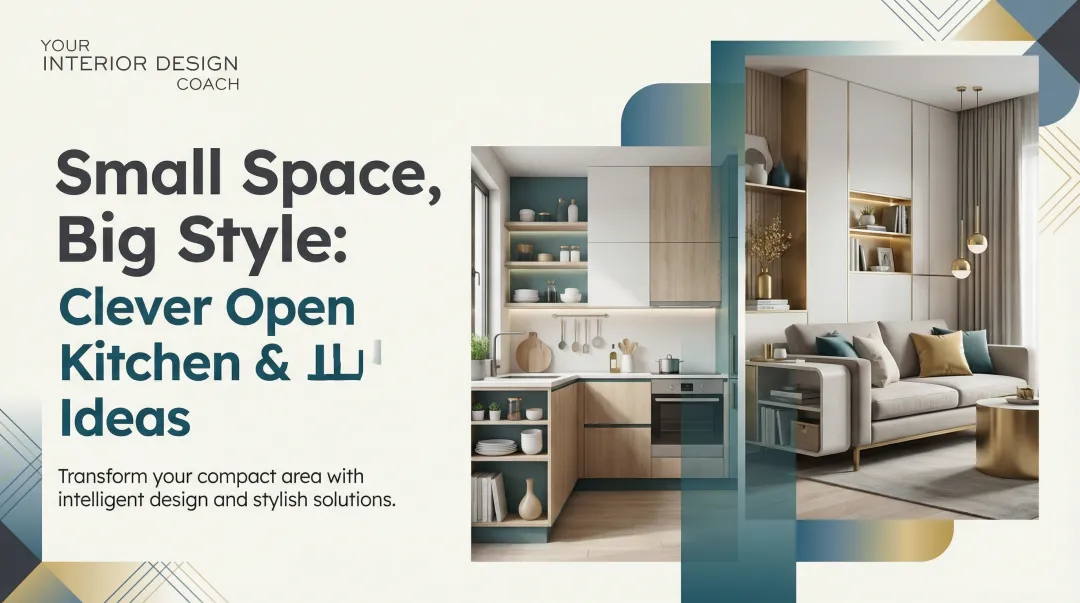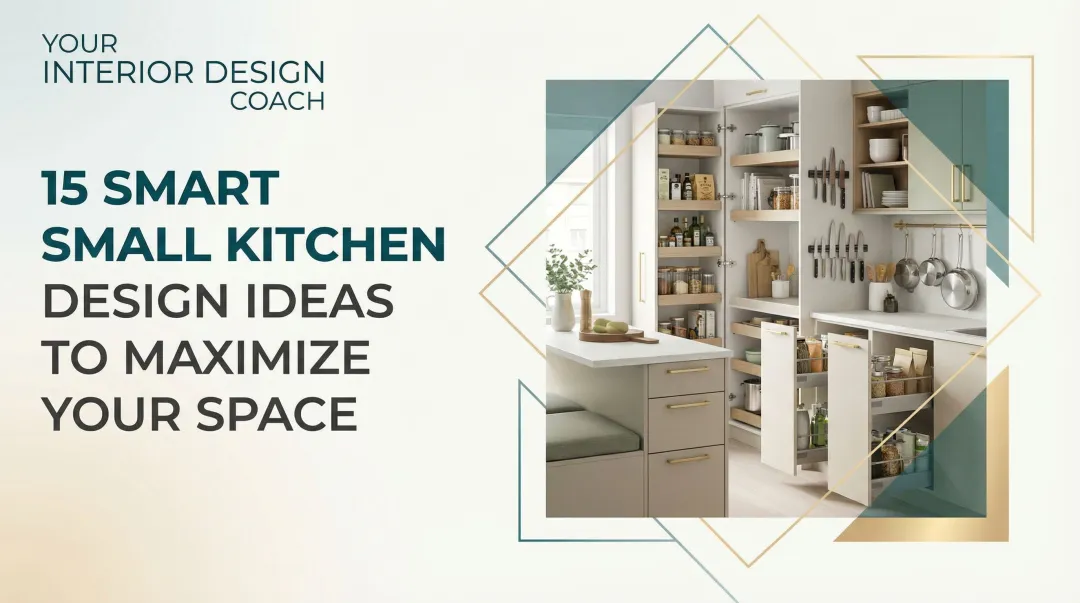
Multi-use living isn't about cramming everything into one room. It's about deliberate design that serves multiple purposes without sacrificing comfort or style.
When done right, small spaces can feel more intentional and curated than sprawling single-purpose rooms. Your home must now accommodate work, relaxation, entertaining, and more, all within limited square footage. Success comes from designing with that reality in mind.
Your Quick Summary
- Prioritize functions by daily use before planning your layout
- Define zones with rugs, lighting, and furniture, not walls
- Multi-purpose furniture (serving 2-3 functions) maximizes space without clutter
- Maintain visual calm through a 3-4 color palette and intentional editing
Why Small Spaces Demand Smart Multi-Use Design
Modern homes have become command centers for our entire lives. You're expected to work productively, exercise regularly, entertain guests, and relax, all within the same four walls.
The psychological toll is real: research shows that residential units below 30 square meters (323 square feet) consistently link to reduced satisfaction, and poorly designed compact spaces trigger chronic stress.
The specific challenges stack up quickly:
- Storage scarcity forces belongings into view, creating visual clutter
- Undefined zones make it impossible to mentally shift between work mode and relaxation
- Competing functions clash when the dining table doubles as a desk but never feels right for either purpose
- The "too busy" trap where every surface serves a purpose but nothing feels cohesive
A smaller room can still work well, but it cannot treat every activity as equally important. If work happens every day and entertaining happens once a month, the layout should reflect that. Post-pandemic housing must accommodate remote work as a standard function, requiring an additional 3-5 square meters per worker, but this doesn't mean sacrificing elegance.
When you approach small spaces with intention, they become showcases of efficiency and style where every piece earns its place and every inch serves a purpose. The result feels curated, not cramped.
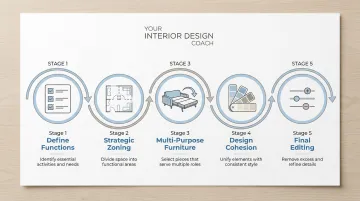
Step 1: Define Your Space's Functions and Priorities
Before you move a single piece of furniture, list every activity your space must handle:
- Daily essentials: sleeping, working, eating, cooking
- Regular activities: exercising, reading, hobbies
- Occasional needs: entertaining guests, accommodating overnight visitors
- Aspirational uses: meditation corner, creative workspace
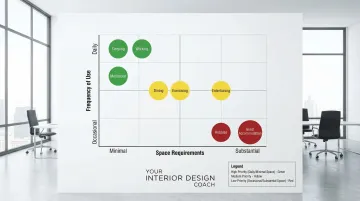
Now rank them ruthlessly. Which three activities happen daily? Which occurs weekly? Monthly? This hierarchy determines your design decisions.
Timing and Overlap Strategy
Look for time-of-day overlap opportunities. Morning yoga and evening entertainment can share the same floor space because they never compete for the same hours, and recognizing that overlap is often the key to unlocking a layout that seemed impossible. What I've seen with clients is that this single reframe (thinking in terms of time rather than permanent zones) is what turns a seemingly unsolvable small-space problem into a workable plan.
Identify conflicts: Some activities cannot coexist. A workspace requires focus and separation from relaxation zones. Guest sleeping areas need privacy from living spaces. These require distinct zones, not just time-sharing.
This planning process reveals competing priorities that can feel overwhelming. When you're struggling to balance conflicting needs, working with an interior design coach can clarify what matters most. If you're stuck and haven't been able to figure out how to prioritize the functions in your space, call me at 408-306-5003 for a free consultation - getting that clarity is often the first step to getting unstuck.
With almost 20 years of experience, I help clients ask the questions they didn't know to consider, turning vague frustrations into actionable priorities.
Step 2: Master Your Layout with Strategic Zoning
The key to elegant small space design is creating "zones without walls." Instead of physical barriers that shrink your space, you'll define distinct areas through strategic furniture placement, rugs, and visual cues. This approach maintains openness while giving each function its own identity.
Start with the Anchor Method
Identify your largest or most important furniture piece (typically a sofa or bed) and position it first. Build zones around this anchor, using it to define the primary function of that area. Starting with the anchor removes the paralysis of staring at an empty room with too many options - everything else finds its place relative to that first decision.
Once your anchor is in place, turn your attention to movement through the space.
Create Clear Pathways
Maintain 30-36 inches of walkway between large furniture pieces for main pathways. In tight spaces, 18-24 inches is the absolute minimum for secondary paths.
Cramped circulation makes even spacious rooms feel claustrophobic.
Use Rugs as Zone Definers
The most common rug mistake is choosing one that's too small, which undermines the zone definition you're working to create. Follow these sizing guidelines:
- Living areas: Place your rug to extend under the front legs of sofas and chairs, ideally 6-8 inches past the sofa ends
- Dining zones: Extend rug at least 24 inches beyond table edges so chairs stay on the rug when pulled out
- Small rooms: Leave 8 inches of bare floor between rug edge and walls to frame the space
Beyond size, different rug shapes, colors, or textures visually separate zones without adding physical dividers.
Think Vertical to Define Boundaries
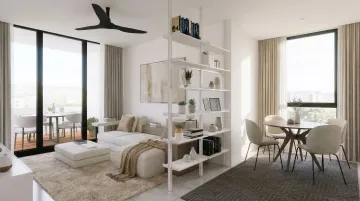
Tall bookshelves and wall-mounted storage draw the eye upward, creating the illusion of height while defining boundaries. A floor-to-ceiling shelving unit can separate a sleeping area from a living zone while maintaining openness and providing essential storage.
Step 3: Choose Furniture That Works Double (or Triple) Duty
Multi-purpose furniture is essential in small spaces, but quality is not optional. Cheap convertibles feel flimsy with repeated use and signal compromise rather than intention, which undermines everything else the room is doing. Elegant solutions blend seamlessly into sophisticated design and hold up over years of daily mechanism use.
Essential Multi-Purpose Categories
Transformable sleeping:
- Murphy beds with integrated desks or sofas
- High-quality sofa beds that actually provide comfortable sleep
- Loft beds (in high-ceiling spaces) creating usable area underneath
Convertible surfaces:
- Drop-leaf or extendable dining tables that expand for guests
- Coffee tables that lift to become work or dining surfaces
- Wall-mounted fold-down desks
Storage seating:
- Ottomans with hidden compartments
- Storage benches serving as seating, storage, and room dividers
- Window seat benches with lift-top storage
Evaluate Scale and Proportion
Once you know what furniture types you need, scale becomes critical. Furniture must be proportional to room size.
In apartments under 800 square feet, choose sofas with slim arms and shallow depth. The thickness of sofa arms alone can consume valuable space. A track arm takes up significantly less than a rolled arm without sacrificing seating.
Furniture with exposed legs appears lighter than boxy designs sitting directly on the floor, contributing to visual openness even when the footprint is identical.
Investment Priorities
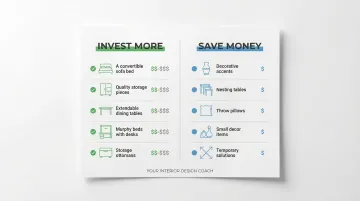
When clients feel overwhelmed by furniture decisions, I usually recommend prioritizing investments this way. Spend more on:
- Convertible seating that you'll use daily (sofa beds, daybeds)
- Quality storage pieces with smooth mechanisms
- Extendable dining tables with sturdy construction
Save on:
- Decorative accent pieces
- Nesting tables (functional but not structural)
- Temporary solutions you'll upgrade later
Step 4: Maintain Elegance Through Design Cohesion
In smaller spaces especially, too many disconnected colors, materials, or styles can quickly make the room feel visually cluttered and overwhelming. Design cohesion helps create a sense of flow, balance, and calm by making the different elements of the space feel intentionally connected rather than randomly placed.
Establish a Limited Color Palette
Use 3-4 colors maximum to prevent visual chaos. The 60-30-10 rule provides balance: 60% dominant color, 30% secondary color, 10% accent color.
Light neutrals create visual continuity, helping the eye move smoothly through the room. However, dark, moody colors applied consistently (color-drenching walls, ceiling, and trim) can create an enveloping, cozy atmosphere if that suits your aesthetic.
Layer Textures, Not Colors
Texture adds depth without visual noise. Mix materials strategically:
- Soft textiles: linen throws, chunky knits, velvet cushions
- Natural elements: wood furniture, rattan accents, stone surfaces
- Reflective finishes: brushed brass lamps, glass tables, polished metal hardware
This layering creates interest while maintaining visual calm.
Edit Ruthlessly
Every item must serve a function or bring genuine joy. Nothing else makes the cut. In small spaces, clutter isn't just aesthetic. It's psychological weight.
I usually start with the things that keep getting moved from one surface to another: the extra chair no one sits in, the side table that only collects mail, the baskets that hide clutter but do not solve it. Those are usually the clues that the room needs a better system, not more décor.
Layer Your Lighting
Effective lighting requires three layers: ambient (overall), task (specific activities), and accent (highlighting features). Different lighting types define zones and create dimension. A pendant over the dining table separates that area more powerfully than a rug might.
Overhead lighting alone flattens the space. Layer in:
- Table lamps for task lighting and warmth
- Wall sconces to free up surface space
- Floor lamps to highlight reading nooks or corners
- Dimmer switches to adjust mood throughout the day
This approach creates depth and sophistication.
Prioritize Closed Storage
While open shelving has its place, closed storage becomes essential for hiding visual clutter. Invest in furniture with concealed compartments, decorative boxes, and cabinets that tuck away the unglamorous necessities of daily life.
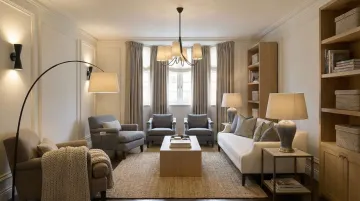
Step 5: Avoid These Common Small Space Mistakes
Mistake #1: Pushing All Furniture Against Walls
This actually makes rooms feel smaller by eliminating depth. Floating furniture, even just a few inches from the wall, creates breathing room and better defines activity zones. In a 12×14 living room, pulling a sofa 8 inches forward and adding a narrow console behind it transforms the space from cramped to dimensional while adding storage.
Mistake #2: Over-Accessorizing with Small Items
Too many small decor pieces create visual clutter. Choose fewer, larger statement pieces instead. One large piece of artwork makes more impact than a gallery wall of tiny frames in a compact room.
Mistake #3: Ignoring Vertical Space
Failing to use walls for storage and shelving wastes valuable real estate. Floor-to-ceiling solutions maximize capacity without expanding the footprint.
Mistake #4: Poor Lighting Strategy
Relying solely on overhead fixtures creates flat light. Layer ambient, task, and accent lighting to add dimension and define zones. Pools of light create intimacy and purpose within the larger space.
Mistake #5: Inconsistent Style
Mixing too many design aesthetics fragments small spaces visually. Commit to one cohesive direction and maintain it throughout:
- Modern minimalist with clean lines and neutral palette
- Warm traditional with layered textures and classic pieces
- Industrial chic with metal accents and raw materials
If you’re feeling stuck because the room still feels crowded after you’ve moved things around, I can help you look at what is causing it: too many functions in one area, furniture that is too large, storage that is not doing enough, or a layout that does not leave a clear path through the room. Reach out for a free consultation at 408-306-5003, and we can take it from there.
Your Quick Recap
Small spaces do not fail because of size - they fail because the layout tries to do too many things without committing to any of them. The key is deciding what the room must do well, not what it could theoretically do. Once that is clear, every other decision gets easier.
- Rank your daily activities before you move a single piece of furniture
- Rugs define zones for free; furniture arrangement reinforces them
- Visual clutter is often the real reason a small space feels small - edit before you buy
- Multi-purpose furniture only works if the mechanism is good; cheap convertibles become frustrating fast
- Vertical storage above eye level is the most underused square footage in most homes (bonus insight)
- Consistent lighting across the whole space makes it feel larger and more cohesive than mixing styles (bonus insight)
If you're still feeling stuck and haven't been able to move things forward, let's talk! Reach out for a free consultation at 408-306-5003, and we can take it from there.
Frequently Asked Questions
What is the 2/3 rule for living rooms?
The 2/3 rule states that furniture should cover two-thirds of the floor space, leaving one-third open for flow. It also applies to proportions: sofas should be roughly two-thirds the wall length, and artwork should span two-thirds the width of furniture below it.
How do you make a small living space look elegant without cluttering it?
Maintain a limited color palette (3-4 colors maximum) and choose quality over quantity. One beautiful object beats five mediocre ones. Invest in multi-functional furniture with clean lines, use closed storage to hide clutter, and layer textures rather than patterns for visual interest without chaos.
What's the best furniture for a studio apartment that needs to serve multiple purposes?
Three essentials: a quality sofa bed or daybed for sleeping and seating, an extendable dining/work table, and a storage ottoman for seating and concealed storage. Murphy beds with integrated desks or sofas reclaim floor space during the day.
How can renters create multi-functional spaces without permanent changes?
Use removable wallpaper to define zones, tension rods for curtain dividers, and freestanding shelving units as room dividers. Focus on furniture-based zoning rather than built-ins, and use Command hooks for vertical storage without damaging walls.
What's the biggest mistake people make when designing small multi-use spaces?
Trying to accommodate too many functions without prioritizing, leading to a space that serves no purpose well. It's better to excel at 2-3 main functions than poorly accommodate five. Design around your daily essentials first, and handle occasional needs with flexible, movable solutions.
Should I hire an interior designer for a small space, or can I do it myself?
You can do a lot yourself if you know the room’s measurements and the main things it needs to handle. A design coach becomes helpful when the same space has to support too many things and you cannot tell what to give priority to. For example, if the dining table is also your desk, the sofa has to work for guests, and storage keeps spilling into the room, I can help you decide what should stay, what needs to move, and what the room should solve first.