These frustrations are common among wine enthusiasts. Without a clear system, even modest collections become chaotic: bottles get forgotten, drinking windows pass unnoticed, and you can't quickly find what you need when it matters most.
A good organization system transforms your collection from a source of stress into genuine enjoyment. Whether you're managing 20 bottles or 200, a clear approach preserves quality, protects your investment, and helps you pour the right wine at the right time - rather than discovering a special vintage two years past its peak.
This guide covers storage solutions, categorization methods, and tracking systems that work for your space, collection size, and drinking habits. I’ve seen a lot of my clients start with just a few good bottles and then slowly realize the collection has taken over kitchen counters, cabinets, and random corners of the house.
Your Quick Summary
- Know exactly what you own and when to drink it with complete inventory sorted by type and vintage
- Ideal storage conditions: 55-60°F, 60-70% humidity, minimal light
- Organize by region, varietal, vintage, or occasion based on your selection habits
- Use apps or spreadsheets to track drinking windows and prevent waste
- Review quarterly to rotate stock and move wines approaching their peak to accessible locations
Assessing Your Wine Collection
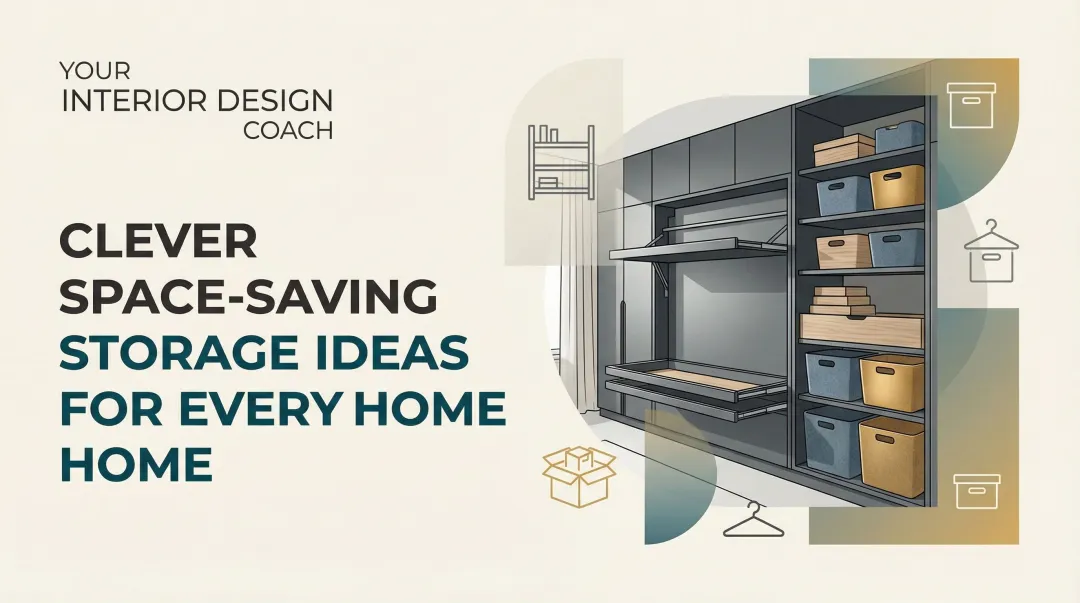
Before setting up any organization system, gather every bottle from throughout your home: kitchen counters, closets, basement corners, and that rack you forgot about. You can't organize what you haven't accounted for.
Initial Sorting Categories:
Start with broad groupings to understand what you're working with:
- Reds - Cabernet, Merlot, Pinot Noir, Syrah, and blends
- Whites - Chardonnay, Sauvignon Blanc, Riesling, Pinot Grigio
- Rosés - Dry and sweet styles
- Sparkling - Champagne, Prosecco, Cava
- Fortified - Port, Sherry, Madeira
Identifying Drinking Windows
Not all wines improve with age. According to research, only 1-5% of wines are designed for long-term aging. Most are meant for consumption within a few years of release.
Categorize your bottles into three groups:
- Drink Now - Everyday wines, most whites, and wines already at peak
- Short-Term (1-3 years) - Mid-range reds and structured whites
- Age-Worthy (3+ years) - Premium wines with high acidity, tannins, and balance
Use vintage charts or apps like CellarTracker to determine good windows for unfamiliar bottles. This prevents opening wines too early or discovering them years past their prime - and it means special bottles are waiting for you at their best rather than sitting forgotten until the moment has passed.
Condition Check
Examine each bottle for these warning signs:
- Fill level - Should reach the bottle's neck; low fills suggest oxidation
- Cork condition - Pushed or leaking corks indicate heat damage
- Label condition - Damage may signal storage problems
- Color - Deep gold whites or browning reds suggest oxidation
Document everything in a preliminary spreadsheet: wine name, vintage, region, purchase date, price paid, and current condition. This inventory becomes the foundation of your tracking system.
Choosing the Right Storage Location and Environment
Storage conditions make the difference between wine that develops beautifully and bottles that deteriorate into expensive vinegar.
Ideal Storage Conditions
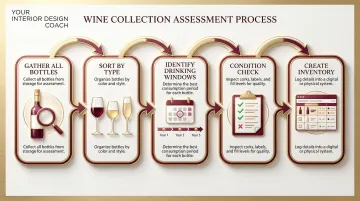
Wine experts agree on specific storage requirements:
- Temperature: 55°F (13°C) ideal; 45-65°F acceptable
- Humidity: 60-70% relative humidity
- Light: Complete darkness or UV-resistant glass
- Vibration: Minimal movement and disturbance
Why consistency matters more than perfection: A stable 65°F environment beats a fluctuating 55-70°F space because temperature swings cause liquid expansion and contraction, which compresses and loosens cork seals repeatedly - eventually allowing oxygen in and accelerating aging unpredictably.
Before you buy racks or move bottles into a permanent spot, I recommend taking a few days to see how stable the space really is. A hygrometer and thermometer will tell you quickly whether the area stays cool, dark, and consistent enough for wine.
Evaluating Home Locations
Best storage locations:
- Basements: Naturally cool and stable temperatures make these ideal; watch for excessive humidity that causes mold
- Interior closets: Work well for smaller collections when dark and temperature-stable
- Under-stair storage: Combines darkness with good temperature consistency
Locations to avoid:
- Kitchens: Cooking heat and appliance use create damaging temperature spikes
- Garages: Seasonal swings from freezing winters to hot summers ruin wine
- Near HVAC vents: Direct airflow creates temperature instability
Monitor conditions for several weeks with a hygrometer and thermometer before storing any wine. Track daily fluctuations versus gradual seasonal drift.
In my experience, clients usually want a storage setup to do two things at once: protect the wine and stay out of the way visually. The best solution is the one that fits your home without turning storage into another project you have to manage every day.
Space Planning Considerations
Once you've identified a suitable location, calculate the physical space you'll need.
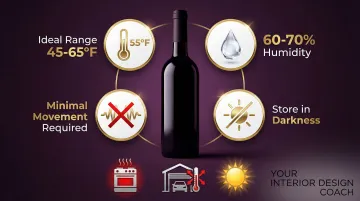
Standard Bordeaux bottles measure 11.5-13 inches tall and 3-3.25 inches in diameter. Burgundy bottles are wider at 3-3.75 inches.
Calculate your requirements:
- Measure available wall or floor space
- Account for bottle dimensions plus access clearance
- Plan for growth: collections expand 20-30% annually
- Make sure racks are at least 14.5 inches deep for full bottle support
Smaller homes present unique challenges for wine storage. Look for underutilized spaces like hall closets, below-stair areas, or unused corners that maintain stable conditions. I’ve worked with a lot of clients who assumed they needed a full wine cellar, when really they just needed one well-planned area that kept the bottles protected and easy to access.
Organization Methods: Finding Your System
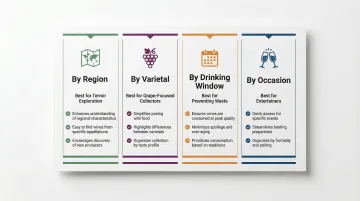
The best organization system aligns with how you actually think about and select wines. Most collectors benefit from combining multiple methods.
Organize by Wine Region or Country
Geographic organization helps you explore terroir (the unique characteristics imparted by growing location) and make pairing decisions based on regional food traditions.
Implementation:
- Group all French wines together, subdividing by Bordeaux, Burgundy, Loire, Rhône
- Create separate sections for California, Italy, Spain, Australia
- Within each region, organize by sub-region or appellation
Best for: Collectors who enjoy comparing regional expressions and those who pair wines with specific cuisines.
Organize by Wine Type or Varietal
Varietal-based systems group all Pinot Noirs together regardless of origin, all Chardonnays in another section.
Benefits:
- Quick selection when you know you want a specific grape
- Easy comparison of different regional interpretations
- Intuitive for collectors who prefer certain varietals
Best for: Those who select wines based on grape type rather than geography.
Organize by Vintage or Drinking Window
This practical approach prevents waste by making sure wines are consumed at their peak.
Create distinct sections:
- Drink Now - Wines at peak or past their window - keeping these in the most accessible position means you actually open them before the window closes
- 1-2 Years - Bottles approaching readiness
- 3-5 Years - Medium-term aging
- 5+ Years - Long-term investment bottles
Reference vintage charts quarterly to move wines between categories as they approach maturity. Wine experts recommend this method once collections exceed 100 bottles to manage drinking windows effectively.
Best for: Collectors focused on drinking wines at optimal maturity and preventing over-aging.
Organize by Occasion or Purpose
Beyond time-based organization, lifestyle-focused systems simplify daily wine selection based on how you actually use your collection.
Categories:
- Weeknight wines - Affordable, easy-drinking bottles
- Dinner party wines - Crowd-pleasers and conversation starters
- Special occasions - Anniversary, celebration, and milestone bottles
- Cooking wines - Inexpensive bottles for culinary use
Best for: Hosts and entertainers who select wines based on social context.
Mixed Organization Systems
Serious collectors often combine methods. You might organize primarily by region but keep a separate "drink now" section for easy access. Or group by varietal with vintage tags marking drinking windows.
Experiment for 2-3 months. Your ideal system should make selection feel natural and prevent bottles from being forgotten.
Storage Solutions and Equipment
The right storage solution protects your investment while fitting well into your space. Choose storage that matches your collection size, available space, and budget.
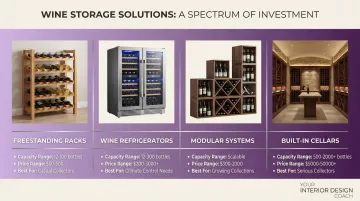
Storage Options Comparison
Each storage type serves different collection sizes and spatial constraints:
Freestanding Wine Racks
- Capacity: 12-100+ bottles
- Price: $50-$500
- Best for: Collections under 100 bottles in climate-controlled rooms
- Considerations: Requires stable ambient conditions; no active cooling
Wine Refrigerators
- Capacity: 12-300+ bottles
- Price: $200-$3,000+
- Best for: Apartments and homes without suitable storage spaces
- Features: Active cooling, humidity control, vibration dampening, and UV-resistant glass
Modular Systems
- Capacity: Scalable to hundreds of bottles
- Price: $300-$2,000
- Best for: Growing collections needing flexibility
- Benefits: Stackable cubes or bins that expand as your collection grows
Built-In Wine Cellars
- Capacity: 500-2,000+ bottles
- Price: $5,000-$50,000+
- Best for: Serious collectors with dedicated space and budget
- Features: Custom racking, dedicated cooling units, proper insulation
Critical Storage Requirement
Store cork-sealed bottles horizontally to keep liquid in contact with the cork, which maintains its moisture and sealing properties. Vertical storage allows corks to dry out, shrink, and become porous - once oxygen enters, the wine oxidizes and the bottle is lost.
Screw-cap and glass-closure bottles can be stored upright since they don't rely on moisture for sealing.
Tracking and Inventory Systems
Proper tracking prevents waste and helps make sure wines are consumed at their peak.
Digital Wine Apps
Modern inventory apps offer useful features:
- Instantly add bottles to your database through barcode scanning
- Receive notifications when wines approach peak maturity
- Record specific rack or bin positions for easy retrieval
- Monitor collection value over time with built-in valuation tools
- Document your impressions for future reference
Collections exceeding 100 bottles benefit significantly from digital tracking, while those over 200 bottles need systematic inventory management to prevent bottles from being forgotten.
Low-Tech Alternatives
If apps feel like overkill for your collection size, these simpler methods work well:
- Spreadsheets - Create columns for wine name, vintage, region, purchase date, price, location, and drinking window
- Physical cellar books - Handwritten logs with the same information
- Color-coded tags - Attach neck tags using colors to indicate drinking windows (red = drink now, yellow = 1-3 years, green = 3+ years)
Whichever tracking method you choose, capture these essential details:
- Producer, varietal, vintage, region
- Drink-by date - Critical for rotation
- Purchase date and price
- Storage location (bin/rack number)
- Personal ratings or tasting notes
Maintenance and Best Practices
Organization isn't a one-time project. Your wine collection changes as you buy new bottles, drink favorites, and as wines mature, which means your system needs regular attention to stay functional.
Establish a Rotation System
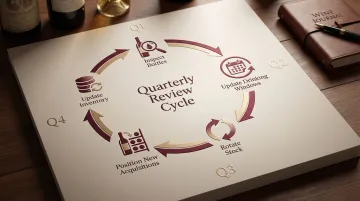
Quarterly review process:
- Check conditions of all bottles, looking for leaks, cork issues, or label damage
- Update drinking windows based on current vintage charts
- Move wines approaching maturity to easily accessible locations
- Place new acquisitions behind older bottles of the same wine
- Update your inventory system with any changes
Regular rotation helps make sure your best bottles get enjoyed at peak maturity rather than sitting forgotten in the back of storage.
Proper Bottle Handling
Keep disturbance to a minimum to preserve wine quality:
- Handle bottles gently, avoiding shaking or jostling
- Always return bottles to horizontal position immediately after checking labels
- Avoid temperature shocks by letting bottles adjust gradually when moving between storage areas
- Keep long-term aging wines separate from everyday selections to reduce vibration and disturbance
If you’re feeling stuck trying to figure out how to store your wine collection without taking over your entire space, I can help you think through options that fit your home, collection size, and budget. Whether that’s built-ins, cabinetry, or a simpler rack setup, the goal is to make the storage feel functional and natural in your home. Reach out at 408-306-5003 for a free consultation and we can take it from there together.
Your Quick Recap
Wine organization is not just about finding bottles faster - it is about drinking them at the right time. Most collection losses happen not from bad storage, but from forgotten bottles that age past their window because nobody was tracking them. A simple system prevents that, and it does not need to be expensive to work.
- Temperature consistency matters more than hitting 55 degrees exactly - stability preserves wine
- Horizontal storage is not optional for cork-sealed bottles; it is what keeps the seal intact
- Digital tracking apps pay for themselves with the first bottle they save from being over-aged
- Organizing by drinking window keeps your best bottles from being buried behind everyday selections
- Collections over 50 bottles need a location tracking system; memory is not reliable at that scale (bonus insight)
- Lighting is often overlooked in cellar design - UV exposure degrades wine even at the right temperature (bonus insight)
If you're still feeling stuck and haven't been able to move things forward, let's talk! Reach out for a free consultation at 408-306-5003, and we can take it from there.
Frequently Asked Questions
How many bottles should I have before I need an organization system?
Any collection over 12-15 bottles benefits from basic organization, while 50+ bottles need a systematic approach to prevent waste. Collections exceeding 100 bottles need digital tracking to manage drinking windows effectively.
What's the best temperature for storing wine at home if I don't have a wine cellar?
Consistent temperature matters more than achieving the perfect 55°F. A stable 60-65°F environment beats fluctuating conditions, but avoid temperatures above 70°F, which accelerate aging and damage wine.
Should I organize wines I plan to drink soon differently from aging wines?
Yes. Keep everyday drinking wines in easily accessible locations separate from long-term aging bottles. This reduces disturbance to wines needing stable conditions and prevents accidentally opening special bottles meant for aging.
Do I need to invest in expensive wine storage furniture?
No. Affordable wooden racks or metal storage systems work well as long as they store bottles horizontally and fit your space properly. Focus your budget on achieving proper environmental conditions rather than expensive furniture.
How often should I check on my wine collection?
Conduct quarterly reviews to check bottle conditions, update drinking windows, rotate stock, and make sure storage conditions remain stable. This prevents wines from aging past their peak and catches problems early.
Can I use a regular refrigerator to store wine?
Regular refrigerators are too cold (35-40°F), too dry (under 30% humidity), and vibrate excessively, making them unsuitable for storage beyond a few weeks. They're fine for chilling wines shortly before serving, but dedicated wine fridges are necessary for extended storage.