It feels familiar because we see variations of this setup everywhere, in showrooms, model homes, catalogs, and even most rental apartments. But what people often do not realize is that these default arrangements quietly shape how the room functions. A coffee table that looks perfectly centered in photos might interrupt circulation every single day. A sofa placed against the wall can actually make the room feel more disconnected rather than larger. Even maximizing seating can sometimes create visual tension and make conversations feel less natural.
In interior design, space planning is less about following a formula and more about understanding how the room behaves once people start living in it. Good layouts often look deceptively simple, they are carefully balancing function, spacing, proportion, and visual rhythm beneath the surface.
In this guide, we’ll explore how thoughtful furniture planning changes the way a room feels and how to create layouts that support real life instead of just looking “correct” on paper.
Your Quick Summary
- Strategic furniture placement reduces navigation stress and supports daily activities
- Balance, proportion, and traffic flow principles prevent layout frustrations
- 36-inch walkways and proper furniture spacing ensure comfortable circulation
- Each room type requires tailored strategies for living rooms, bedrooms, and open spaces
- Right-scale furniture and clear pathways improve comfort and save money
What is Space Planning and Why It Matters
Most people think space planning simply means arranging furniture so everything fits inside a room. In professional interior design, it goes much deeper than that. Space planning is the technical process of organizing circulation, proportions, sightlines, furniture relationships, and functional zones so the space supports how people naturally move, interact, and live within it. It determines where major furniture pieces should sit, how pathways flow through the room, how activities coexist without conflict, and how the visual weight of the layout is distributed across the space.
Good space planning creates rooms that feel intuitive to use because movement, scale, and functionality have been carefully considered beneath the surface. It is the structural framework that shapes how the room performs long before decorative elements are introduced. While decorating focuses on aesthetics like color, texture, and styling, space planning addresses the deeper architectural logic of the room itself; the part that ultimately determines whether a space feels calm, functional, balanced, and comfortable to live in.
Core Space Planning Principles That Transform Any Room
Balance and Proportion
Balance is what makes a room feel visually settled and comfortable to spend time in. In interior design, it is less about making everything perfectly symmetrical and more about distributing visual weight so the room feels stable as a whole.
There are two common ways balance is created within a layout:
- Symmetrical balance uses mirrored arrangements, like matching nightstands beside a bed or identical chairs facing a sofa, to create a more formal, structured feeling
- Asymmetrical balance uses different pieces with similar visual weight, such as a large bookshelf balanced by a pair of smaller chairs and lighting, which tends to feel more relaxed and natural
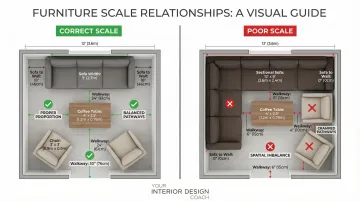
Proportion and scale work alongside balance by making sure the furniture feels appropriately sized for both the room and the way the space functions. What I usually pay attention to is:
- How much breathing room exists around larger furniture pieces
- Whether pathways feel easy to move through
- How the visual weight is distributed across the room
- Whether the furniture feels grounded within the architecture of the space
When balance, proportion, and spacing are working together properly, the room tends to feel calm, intuitive, and far easier to live in, even before decorative styling is introduced.
Traffic Flow and Circulation
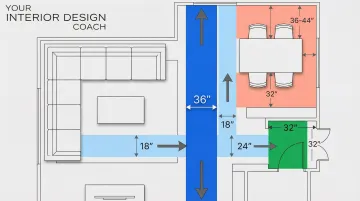
Primary pathways are the routes people naturally take through spaces, from entry to seating, between rooms, or to frequently used areas. Keep these clear.
These measurements prevent daily frustration:
- Main walkways: Minimum 36 inches wide for comfortable passage - this is the clearance that determines whether moving through your home feels natural or whether you're always slightly adjusting to avoid furniture
- Secondary paths: 18-24 inches for edge-past circulation
- Behind seated diners: 36 inches to edge past, 44 inches to walk past
- Doorway clearances: At least 32 inches for unobstructed door swing
Creating and Emphasizing Focal Points
Once your traffic flow works, identify your room's focal point. This dominant feature anchors your design and guides furniture placement.
Natural focal points include:
- Fireplaces with mantels
- Large windows with views
- Built-in shelving or architectural details
- Feature walls with texture or color
Arrange seating to face this focal point. If your living room has a fireplace, position sofas and chairs toward it rather than turning away. No natural focal point? Create one with bold artwork, an accent wall, or a statement media console.
Functional Zones Within Spaces
Larger rooms and open concepts benefit from division into distinct activity zones (conversation area, reading nook, workspace) using furniture placement and area rugs rather than walls. Each zone serves a specific purpose without competing with adjacent areas.
Define each zone's purpose before placing furniture. A living room might include a primary conversation zone with a sofa and chairs, plus a secondary reading zone with an armchair and floor lamp.
Area rugs anchor each grouping, visually separating zones while keeping the room's open feel.
Essential Space Planning Rules Every Designer Uses
The 3-5-7 Rule in Furniture Arrangement
The 3-5-7 rule suggests that groupings of odd numbers (specifically three, five, or seven items) are more visually appealing than even-numbered arrangements. This principle applies to decorative objects on coffee tables, throw pillows on sofas, and artwork arrangements on walls.
Why it works: Odd numbers create visual tension and rhythm that guide the observer's gaze more effectively than symmetrical even-numbered groupings. Three vases of varying heights on a console table feel more dynamic than two identical pieces.
Practical application: When styling a bookshelf, group decorative objects in clusters of three or five rather than pairs. On your sofa, use three or five throw pillows instead of four or six for a more intentional look.
Balancing Function and Accent: The 70/30 Ratio
The 70/30 rule suggests that 70% of a room should be dedicated to a dominant element while 30% serves as contrasting or accent elements. This applies to color schemes, materials, furniture styles, and space distribution.
In practical terms, 70% of your space might serve functional needs (sofas, storage, dining table) while 30% is dedicated to decorative elements like accent chairs, side tables, and accessories.
This ratio creates balance without monotony. The dominant design choice establishes the room's character while contrasts add visual interest.
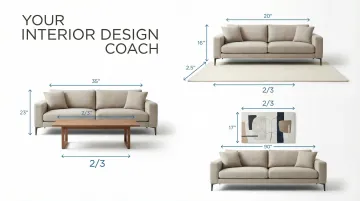
Proportional Sizing: The 2/3 Guideline
The 2/3 rule provides proportional guidance for furniture relationships:
- Coffee tables should be approximately two-thirds the length of the sofa they serve
- The sofa should be roughly two-thirds the length of the rug, or at least two-thirds of furniture should contact the rug
- Wall art above a sofa should be about two-thirds the width of the furniture below it
This rule creates visual anchoring and proportional harmony that feels instinctively balanced.
Standard Clearance Measurements for Comfortable Living
Key clearances for daily comfort:
- 14-18 inches between sofa and coffee table allows legroom while keeping items within reach
- 32 inches from table edge to wall for dining chair pullout if no traffic passes; 36 inches to edge past or 44 inches to walk past
- 24-36 inches between bed and walls or other furniture for comfortable movement
- Approximately 3 inches between bed and bedside table
These measurements make sure daily movement stays comfortable. Too little space creates frustration; too much makes rooms feel disconnected.
Furniture Spacing Guidelines for Conversation and Comfort
Research shows that normal voice ranges feel comfortable when seating is spaced 4-8 feet apart. Closer distances feel crowded; farther apart forces shouting.
For good TV viewing without eye strain, position seating 1.2 to 1.6 times the diagonal screen size from the television.
The viewing angle should not exceed 15 degrees upward to prevent neck strain.
Position desks perpendicular to windows when possible. This allows natural light from the side rather than creating glare from behind or casting shadows from in front.
Room-by-Room Space Planning Strategies
Living Room Layouts That Encourage Connection
For conversation, I usually look at whether my clients can sit down and talk without twisting their bodies or raising their voices. A U-shape or L-shape often works well because the seating faces inward and feels connected.
Anchor the grouping with a coffee table centered among the pieces.
If the TV is part of the room, avoid making every seat line up like a theater unless that is truly how you use the space. Angle chairs slightly when possible so the room still works for conversation, not just screen time.
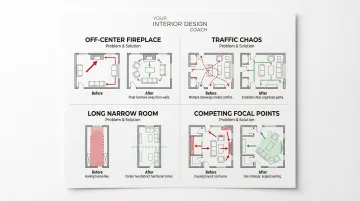
Common living room challenges:
- Off-center fireplaces: Float furniture to create symmetry around the fireplace rather than centering on the room's walls
- Multiple doorways: Identify primary traffic paths first, then arrange furniture to avoid blocking these routes
- Long narrow rooms: Create two distinct zones (conversation area plus reading nook) rather than one stretched-out arrangement
- Competing focal points: Position seating at an angle to accommodate both fireplace and TV viewing
Bedroom Arrangements for Rest and Function
I highly recommend starting with the bed because it takes up the most space and sets the tone for the room. Centering it on the main wall often works well, but the door still needs to open fully and the walkway around the bed needs to feel easy.
Additionally,
- Maintain 24-36 inches of clearance on both sides for comfortable movement and bed-making.
- Provide nightstand access on both sides when possible, spacing them approximately 3 inches from the bed frame to prevent crowding while keeping items easily reachable.
- Position dressers along walls where they don't interrupt traffic flow. If including a seating area or desk, place these pieces away from the bed's immediate vicinity.
This creates visual and functional separation between sleep and activity zones.
Home Office and Multi-Functional Spaces
Use a bookshelf or console table as a room divider to create visual separation without blocking light or sightlines. Position desks to get the most from natural light from the side while keeping privacy from adjacent living areas.
Flexible furniture arrangements: In guest room/office combinations, use a daybed or Murphy bed that folds away, freeing floor space for work activities. Choose a desk that can double as a nightstand or console when guests visit.
For dining room/workspace hybrids, select a dining table that accommodates both meals and laptop work, adding a storage credenza that holds both dining essentials and office supplies.
Small Space Solutions That Maximize Every Inch
Making small rooms feel larger:
- Float furniture away from walls to create depth rather than pushing everything to the perimeter
- Use multi-functional pieces like storage ottomans, nesting tables, and sofa beds
- Choose appropriately scaled furniture: a settee instead of a full sofa, armless chairs instead of bulky recliners
- Maintain clear sightlines by avoiding tall furniture that blocks views across the room
Install floating shelves above desks and sofas to use vertical space well. Use tall, narrow bookcases rather than wide, low ones. Mount TVs on walls to free up floor space occupied by media consoles.
Open Concept Considerations for Defined Spaces
Use sectionals or sofas placed back-to-back to naturally separate living areas from dining spaces. Position a console table behind a sofa to define the living zone's perimeter while keeping an open feel.
Area rugs as anchors: Large rugs ground seating areas and visually distinguish zones. Make sure the rug is large enough to encompass all key seating pieces, with at least the front legs of sofas and chairs resting on the rug.
Maintain clear 36-inch pathways between zones in open layouts. Arrange furniture to guide movement around conversation areas rather than through them, preventing disruption when people move between spaces.
Common Space Planning Mistakes (and How to Fix Them)
Pushing All Furniture Against Walls
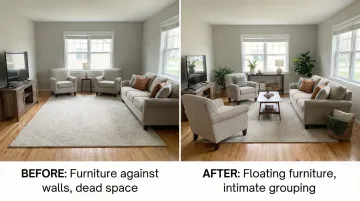
The problem: Pushing furniture against walls creates an unused dead zone in the center and places seating too far apart for comfortable conversation. Rooms actually feel larger when furniture is pulled away from walls because the eye reads depth, not perimeter.
The fix: Float your sofa and chairs inward to create intimate conversation groupings. Even 6-12 inches off the wall transforms the space. Use the room's center for seating rather than treating it as empty floor space.
Ignoring Traffic Patterns and Creating Obstacles
The problem: Furniture blocking natural pathways causes daily frustration: navigating around coffee tables to reach seating, furniture impeding door swings, or circuitous routes through spaces.
These obstacles add up into constant low-level stress.
The fix: Before finalizing furniture placement, walk through the room using natural paths. Identify routes from entry to seating, between rooms, and to frequently used areas. Make sure these maintain 36-inch clearances. Adjust furniture positions to clear these primary pathways, even if it means deviating from your initial vision.
Choosing Wrong-Scale Furniture for the Space
The impact: Oversized furniture in small rooms blocks pathways and makes spaces feel cramped. Undersized furniture in large rooms creates a sparse, incomplete feeling and poor visual balance.
Both mistakes undermine functionality and aesthetics.
The fix: Measure your room dimensions and furniture pieces before purchasing. Apply the 2/3 rule for proportional relationships.
When uncertain about scale, an interior design coach can identify proportion problems you might miss when shopping. Fresh expert eyes often catch issues that feel normal after you've adapted to awkward arrangements over time.
When to Seek Professional Space Planning Help
Professional space planning help makes sense in several scenarios:
- Persistent layout frustrations despite multiple rearrangement attempts
- Major furniture purchases where costly mistakes need avoiding
- Renovations requiring new spatial plans
- Feeling genuinely stuck after several failed arrangements
My approach is not to assume you need to replace everything. I usually start by looking at what you already own, how the room is being used, and where the layout is making daily life harder than it needs to be.
If your room still feels awkward after you have tried different arrangements, I can help you look at the layout with fresh eyes. We can sort through furniture size, traffic flow, focal point, rug placement, and daily routines so you know what to adjust before spending money on new pieces. Reach out for a free consultation at 408-306-5003, and we can take it from there.
Space planning consultations can actually save money by preventing furniture purchase mistakes and creating functional layouts with what you already own. Rather than assuming you need new pieces, professional eyes often identify arrangement solutions that transform existing furniture into layouts that finally work.
Your Quick Recap
Space planning rules exist because human comfort has consistent physical requirements - we all need the same clearances, the same conversation distances, the same access to natural light. But the rules are tools, not laws. Once you understand why they exist, you know when to apply them and when a specific room calls for something different.
- The 3-5-7 rule and 70/30 rule are not decorating tricks - they are balance formulas rooted in visual perception
- Furniture pushed against walls is often the exact wrong solution for small rooms; float it instead
- Traffic flow that cuts through activity zones creates daily friction - it is worth solving early
- Clearance measurements are not suggestions; they are the minimum for comfortable daily living
- Furniture arrangement affects how a home appraises and how it sells - buyers feel good layouts intuitively (bonus insight)
- For Airbnb spaces, the 2/3 furniture rule creates the breathing room that guests mention in reviews (bonus insight)
If you're still feeling stuck and haven't been able to move things forward, let's talk! Reach out for a free consultation at 408-306-5003, and we can take it from there.
Frequently Asked Questions
What is the 3-5-7 rule in furniture space planning?
The 3-5-7 rule suggests that groupings of odd numbers (three, five, or seven items) create more visually appealing arrangements than even numbers. Apply this when styling surfaces, arranging throw pillows, or grouping decorative objects for balanced, professional-looking spaces.
What is the 70/30 rule in furniture space planning?
The 70/30 rule allocates 70% of a room to dominant elements (primary furniture, main color) and 30% to contrasting accents. This creates visual balance where your main design establishes character and accents add interest.
What is the 2/3 rule in furniture space planning?
The 2/3 rule guides proportional relationships: coffee tables should be two-thirds the sofa length, sofas should be two-thirds the rug length, and artwork should be two-thirds the width of furniture below it. This creates instinctively balanced, professional-looking arrangements.
How much space should I leave between furniture pieces?
Leave 14-18 inches between sofas and coffee tables, 30-36 inches for main walkways, and 24-36 inches around beds. These measurements balance accessibility with comfortable reach, preventing both cramped conditions and awkward stretching.
What's the biggest mistake people make with space planning?
Choosing wrong-scale furniture creates the most persistent problems. Oversized pieces block pathways and overwhelm rooms, while undersized furniture feels sparse. Always measure your space and furniture before purchasing.
Can I do effective space planning in a rental without making permanent changes?
Absolutely. Focus on strategic furniture arrangement using area rugs to define zones, furniture as room dividers, and appropriately scaled pieces that work well with the flow. All solutions are moveable, allowing you to create functional layouts without alterations that violate lease terms.