You're not imagining it. Families face a real spatial squeeze. The average new family home now measures around 1,800 to 2,364 square feet. Meanwhile, 11.1% of U.S. households rent self-storage units to handle the overflow.
The good news? Space planning for families isn't about embracing minimalism or getting rid of everything your kids love. It's about making every square foot work well for your family's actual lifestyle, not some magazine-perfect ideal.
Whether you’re dealing with shared bedrooms, piles of gear near the entryway, or trying to make room for everyday routines, a few thoughtful design choices can make the home function much better without needing a major renovation.
Your Quick Summary
- Vertical wall storage keeps floors clear for play and movement
- Multi-purpose furniture (storage ottomans, beds with drawers) maximizes space
- Rugs and strategic furniture placement define activity zones and contain messes
- Flexible designs adapt from nursery to teen years without major overhauls
How to Understand Your Family's Unique Space Needs
Before buying a single storage bin, spend a week observing how your family actually uses each room - purchasing products before understanding the real problem is the most common reason organizing systems fail. Keep notes on your phone:
- Where does clutter accumulate by day's end?
- Which rooms feel too crowded, and which sit empty?
- Where do traffic jams happen during morning routines?
- What spaces aren't serving their intended purpose?
This "space audit" reveals the gap between how your home was designed and how your family actually lives.
That formal dining room you use twice a year? It might better serve as a homework station or play area. The playroom overflowing into the hallway? It may need better storage, not more square footage.
Involving the Whole Family in Planning
Gather input from everyone who lives in the space, including children. Ask specific questions:
- "What frustrates you most about your room?"
- "Where do you wish you had more space?"
- "What's hardest to find or put away?"
For younger children, make it visual. Walk through spaces together and have them point out problem areas.
Older kids can sketch their ideal room layout or create a wish list of what they need space for: sports equipment, art supplies, reading nooks.
This involvement increases buy-in when changes happen and teaches valuable organizational thinking.
Planning for Growth and Change
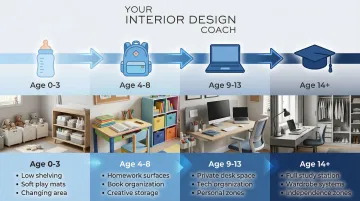
Children's needs shift dramatically every few years. Design with evolution in mind:
Age 0-3: Prioritize accessible toy storage at floor level and changing stations Age 4-8: Add homework surfaces, book storage, and space for larger toys Age 9-13: Incorporate desk space, technology charging, and privacy elements Age 14+: Focus on study areas, clothing storage, and personal expression
Choose adjustable systems: shelving with movable brackets, desks with height options, storage that can be reconfigured. A well-chosen piece should serve your family for 5-10 years, not just one phase.
Maximizing Living Areas and Common Spaces
Creating Defined Activity Zones
Open-plan living works beautifully for families when you establish clear zones. Use these strategies to divide space without building walls:
- Position furniture as dividers: Place a sofa with its back to the dining area to create visual separation
- Anchor zones with rugs: A large area rug under the seating area defines the "living room," while a different rug under the table marks the "dining zone" - when each zone has a physical boundary, tidying up becomes faster because everything has a clear place to return to
- Use low shelving: Open bookcases create boundaries while maintaining sightlines for supervision
Defined zones help contain messes - blocks stay in the play area, homework stays at the table - and teach children spatial awareness by giving them a concrete sense of where things belong. If you're stuck figuring out how to create functional zones without a major overhaul, call 408-306-5003 for a free consultation - we can identify solutions that work for how your family actually lives.
Choosing Family-Friendly Furniture Layouts
Let safety and supervision drive your layout decisions. The National Kitchen & Bath Association recommends these clearance standards:
- Main walkways: minimum 36 inches wide
- Behind seated diners with traffic: 44 inches clearance
- Behind seated diners without traffic: 32 inches clearance
Floating furniture away from walls creates more usable space and better defines zones. When arranging seating, prioritize adult sightlines to play areas from the kitchen or main work hub, and avoid sharp-cornered coffee tables at toddler head height.
Multifunctional Furniture for Shared Spaces
Every piece of furniture should earn its footprint. Look for items that work double duty:
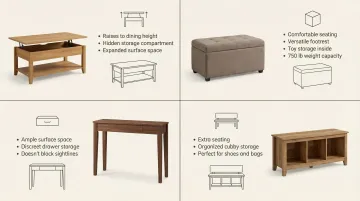
- Lift-top coffee tables: The top raises to dining/laptop height while revealing storage inside for remotes, coloring books, or board games
- Storage ottomans: Provide seating, footrest space, and hidden storage for blankets or toys; some sectional ottomans support up to 750 lbs
- Console tables with drawers: Behind the sofa, they create surface space and storage without blocking sightlines
- Benches with cubbies: Offer seating plus organized storage for shoes, bags, or sports equipment
Select pieces built to withstand family wear: solid construction, stain-resistant fabrics, and finishes that hide fingerprints.
Vertical Storage Solutions
Wall-mounted storage keeps floor space clear while keeping essentials accessible:
- Floating shelves for books and display items
- Wall-mounted cabinets for items you want out of reach
- Pegboard systems for art supplies, bags, or frequently used items
Critical safety note: Professional-grade adjustable rail systems support up to 170 lbs per linear foot, but all wall storage must be properly anchored to studs.
In homes with climbing children, secure heavy furniture to walls to prevent tip-overs.
Mount frequently used items within children's reach (15-48 inches from floor) to encourage independence.
Managing Media and Technology
Electronics generate both cable chaos and visual clutter. Contain them with these approaches:
- Use a media console with closed cabinets to hide gaming systems and DVDs
- Install a charging station drawer with built-in power strips
- Mount the TV to free up surface space below
- Use cable management sleeves or cord covers to bundle wires along walls
Create a "media zone" that can be closed off with cabinet doors when not in use, maintaining a calmer visual environment during non-screen time.
Optimizing Bedrooms and Kids' Spaces
Shared Bedroom Strategies
When siblings share a room, maximize floor space and minimize conflict:
- Bunk beds: The classic space-saver, freeing floor area for play or desks
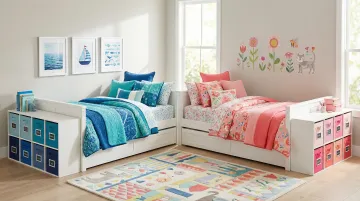
- L-shaped arrangement: Place beds along two walls to create a central play zone
- Visual separation: Use different wall colors, curtains between beds, or a bookshelf as a room divider
In shared bedrooms, I usually look for small ways to give each child something that feels like theirs. It does not have to be a separate room. Even one drawer, shelf, basket, or wall section can make the space feel more fair and easier to manage.
Under-Bed and Vertical Storage for Kids' Rooms
The space under a bed offers valuable storage:
- Rolling storage bins for out-of-season clothes
- Drawer systems for toys or craft supplies
- Platform beds with built-in drawers
Vertical solutions multiply storage capacity:
- Wall-mounted book ledges (shallow shelves that display covers)
- Hanging organizers for stuffed animals or small toys
- Loft beds that create desk or play space underneath
Safety reminder: Bunk beds and loft beds must comply with federal safety standards. These include guardrails on both sides of upper bunks and proper spacing to prevent entrapment.
Flexible Play and Study Areas
Beyond storage, design spaces that transition as activities change:
- Tables with adjustable height grow from toddler play surface to teen desk
- Modular seating (floor cushions, bean bags) adapts to different activities
- Open shelving systems can be reconfigured as needs shift from toy storage to book storage to display space
Choose lightweight furniture that's easy to rearrange, allowing the room to transform from art studio to reading nook to homework zone.
Closet Organization Systems
Maximize closet capacity with these upgrades:
- Double hanging rods (one at adult height, one lower for kids' access)
- Shelf dividers to keep stacks of clothes organized
- Adjustable systems that grow as children's clothing lengthens - choosing a system that adapts means you won't be replacing it every few years as kids grow
- Clear bins on shelves for visibility
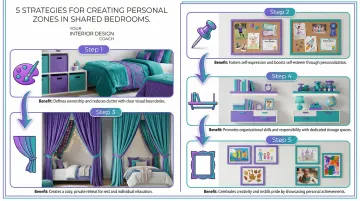
Creating Personal "Zones" in Shared Rooms
Even in shared rooms, each child needs a sense of ownership:
- Color-code storage bins and bedding
- Assign individual bulletin boards or wall sections for personal expression
- Use bed curtains to create privacy cocoons
- Designate separate shelves or drawer units
When children have defined personal zones, they're more likely to keep those areas organized and experience fewer territorial disputes with siblings.
Kitchen and Dining Area Efficiency
Kid-Accessible Organization
Foster independence by creating low-access zones:
- Bottom drawers for kids' dishes, cups, and utensils
- Lower pantry shelves for approved snacks and lunch-packing supplies
- Clear bins labeled with pictures for pre-readers
- Fridge bins at kid height for grab-and-go items
When children can access what they need and return items independently, you reduce constant requests and build self-sufficiency.
Maximizing Vertical Kitchen Storage
Clear your counters by using wall and ceiling space:
- Install pot racks on ceilings or walls to free up cabinet space
- Mount magnetic knife strips instead of using drawer organizers
- Add wall-mounted spice racks above prep areas
- Hang wire baskets for onions, potatoes, and produce
- Attach organizers to cabinet doors for lids, measuring cups, or cleaning supplies
The NKBA recommends 1,400-2,000 inches of total shelf/drawer frontage depending on kitchen size, so use every available surface.
Flexible Dining Solutions
Make the most of limited dining space:
- Banquettes with storage use corners while providing hidden compartments underneath for toys, linens, or seasonal items.
Extendable tables accommodate daily family meals and occasional larger gatherings without permanently consuming floor space.
Fold-down wall tables mount flat against the wall when not in use, ideal for tight kitchens or breakfast nooks.
Maintain proper clearances: 32 inches from table edge to wall without traffic, 44 inches with traffic passing behind. For multi-purpose use, keep portable supply caddies for homework or crafts that clear quickly at mealtime.
Strategic Storage Throughout the Home
Entryway and Mudroom Solutions
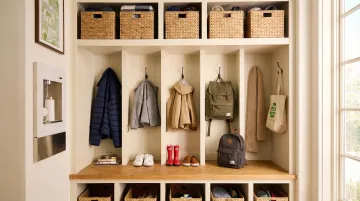
Stop the clutter explosion at the entry point:
- Hooks at multiple heights: adult coats up high, kids' backpacks within easy reach
- Individual cubbies or lockers for each family member
- Bench seating with shoe storage underneath
- Wall-mounted mail organizer and key hooks
- Basket for items that need to go upstairs
A well-designed landing zone contains the daily flow of bags, shoes, sports equipment, and paperwork before it spreads through the house.
Bathroom Organization for Families
Moving from the entryway into more personal spaces, bathrooms present their own storage challenges, especially in busy family homes.
Maximize limited bathroom storage:
- Over-toilet shelving units for towels and toiletries
- Drawer dividers to organize small items
- Lazy susans in cabinets for easy access to products
- Shower caddies for each family member's products
Create personal zones using color-coded towels, individual baskets, and designated shelf space. This reduces morning bathroom conflicts and teaches children to manage their belongings.
Key clearances to maintain:
- 30 inches of clear floor space in front of fixtures
- 20 inches from sink centerline to sidewall
Utilizing Awkward Spaces
Transform "dead" space into functional storage:
- Under-stair areas: Install pull-out drawers, custom cabinets, or create a mini mudroom
- Awkward corners: Add corner shelving units or lazy susans
- Narrow hallways: Mount shallow shelving for books or display
- Sloped ceilings: Build custom low-height storage for toys, books, or linens
These overlooked spaces often provide surprising storage capacity without sacrificing living areas.
Budget-Friendly Implementation Tips
DIY Solutions vs. Professional Help
Tackle these projects yourself:
- Installing basic wall shelving and hooks
- Reorganizing closets with modular systems
- Rearranging furniture for better flow
- Adding under-bed storage
Call a professional for:
- Custom built-ins requiring carpentry
- Structural changes or wall removal
- Electrical work for new lighting or outlets
- Complex measurements for fitted furniture
When you're somewhere in between, an interior design coach like YIDC can provide practical guidance and confidence for DIY projects.
If you’re in that middle place where you can do some of the work yourself but you’re not sure where to start, I can help you decide what is worth buying, what can be reused, and which layout changes will make the biggest difference first. Reach out for a free consultation at 408-306-5003.
Phased Approach to Transformation
Rather than tackling everything at once, break the project into manageable phases:
Phase 1: Tackle your biggest pain point (often entryway or main living area) Phase 2: Address children's bedrooms and shared spaces Phase 3: Optimize kitchen and bathrooms Phase 4: Fine-tune storage throughout
This spreads costs over time and lets you learn what works before investing in solutions for every room.
Start with high-impact areas where you'll see immediate improvement.
Repurposing What You Already Have
Before buying new furniture, look at what you own with fresh eyes:
- Dresser → Changing table with a pad on top, then back to dresser
- Bookshelf → Room divider when placed perpendicular to wall
- Desk → Vanity with a mirror added
- Console table → Homework station with added task lighting
Shop strategically for only key multi-purpose pieces that fill genuine gaps. Combine creative repurposing with targeted new purchases to keep costs manageable.
Your Quick Recap
Family homes do not run out of space - they run out of systems. When every item has a designated home, the maintenance burden drops dramatically. The families who successfully manage small spaces are not minimalists; they are organized. Those are very different things, and organization is learnable.
- Children cooperate with organization when they can reach and put away things themselves
- The entryway is the most important room in a family home for daily function - design it first
- Multi-purpose furniture works best when the storage is genuinely accessible, not just technically present
- Vertical storage keeps floors clear for the movement and play that families actually need
- Building in 20% storage growth capacity prevents the system from collapsing when kids grow
- A quarterly declutter reset is not a chore - it is the maintenance that keeps the whole system running
If you're still feeling stuck and haven't been able to move things forward, let's talk! Reach out for a free consultation at 408-306-5003, and we can take it from there.
Frequently Asked Questions
How do I make the most of space in a small family home without making it feel cramped or cluttered?
Use vertical storage to contain clutter, choose furniture scaled to your space (not oversized pieces), and leave open floor space for movement. Balance storage solutions with breathing room rather than filling every surface.
What are the best multifunctional furniture pieces for families with young children?
Storage ottomans, lift-top coffee tables, platform beds with drawers, and benches with cubbies offer the best versatility for active families. Each combines seating or sleeping with hidden storage that keeps toys and essentials organized.
How can I create separate spaces for multiple children sharing one bedroom?
Use bunk beds with curtains for privacy, position beds in an L-shape with a bookshelf divider, or paint each child's wall area a different color. Give each child personal storage bins, individual lighting, and designated wall space for self-expression.
What's the most cost-effective way to add storage to a family home?
Vertical wall storage (floating shelves, pegboards, wall-mounted cabinets), under-bed storage solutions (rolling bins, drawer systems), and maximizing existing closets with double rods and organizers deliver the highest return on investment without major renovation costs.
How do I maintain an organized family home when everyone is so busy?
Create designated homes for everything, implement quick 10-minute daily resets before bed, and assign age-appropriate responsibilities to all family members. Systems matter more than perfection: when items have clear places to go, tidying becomes faster and more sustainable.
When should I hire a professional interior designer or space planner?
Consider getting help when you keep rearranging the same room and it still feels crowded or when you’re about to buy furniture and are not sure about size, placement, or storage. I can help you narrow down what is causing the problem before you invest in pieces that may not solve it.