After a long flight, you walk into your hotel room. One room has a clear path to the bed, soft lighting, and an intuitive layout. Another has furniture blocking your way, harsh overhead lights, and no obvious place for luggage.
Smart space planning creates that difference.
The principles work identically whether you're hosting family for the holidays, managing an Airbnb, or simply want your home to feel more welcoming.
Research shows that spatial layout accounts for over 50% of guests' perceived value in hospitality settings. The same psychology applies to residential spaces.
This article explores how intentional space planning transforms ordinary rooms into memorable experiences, covering foundational principles, practical techniques, and common mistakes to avoid.
Your Quick Summary
- Clear paths and intuitive layouts boost comfort by 50%+
- Five core principles: function, flow, zoning, proportion, and flexibility work in both homes and hotels
- Furniture placement, lighting, and natural elements shape emotional comfort
- Most improvements come from rearrangement, not new purchases
Why Space Planning Matters for Guest Experience
In my experience, guest experience usually comes down to whether a space feels easy to use the moment someone walks in. The layout, furniture placement, and flow of the room all shape how comfortable and natural the space feels to move through.
Studies on hotel guests demonstrate that interior layout evaluation accounts for over 50% of perceived value (R² = 0.517), which directly shapes loyalty and satisfaction. That's not a design detail - it's the dominant variable.
When guests don't have to think about navigating your space, when the coffee table is exactly the right distance from the sofa, when the pathway to the bathroom is clear even in darkness, the experience feels seamless. If you're feeling stuck on how to achieve this in your home or rental, call 408-306-5003 for a free consultation - we can identify simple changes that make a real difference.
The Psychology of Spatial Comfort
Our brains process spatial information subconsciously - room flow, furniture placement, and visual balance trigger emotional responses before we consciously register them. This is why guests form opinions about a space within seconds of entering.
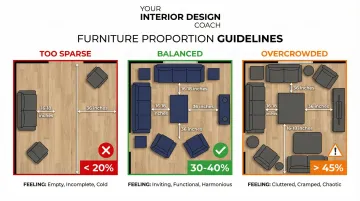
Research reveals that furniture density profoundly affects perceived spaciousness: rooms with 26% surface coverage feel "normal," while 41% coverage registers as "crowded." Sparse furnishing actually makes spaces appear larger than completely empty rooms, because furniture provides scale and context for the eye.
Key psychological factors:
- Clear pathways reduce cognitive load and anxiety - when people can move through a space without pausing or adjusting, they relax into it rather than staying alert
- Defined zones help guests understand room purpose instantly
- Proportional furniture creates visual harmony that feels "right"
- Natural elements trigger restorative responses that support wellbeing
How Poor Planning Creates Friction
Bad space planning shows up as physical and psychological obstacles. Guests bump into furniture corners, hesitate about where to sit, or feel cramped despite adequate square footage. These friction points add up, diminishing the overall experience.
Common friction creators:
- Unclear room purpose (workspace or relaxation zone?)
- Furniture that's too large or too small for the room
- Visual clutter from poor storage solutions
- Lighting that doesn't support room activities
Compensating for Architectural Limitations
When a room has an awkward corner, low ceiling, or tight footprint, I usually look for what the space can still do well instead of trying to force a standard layout into it.
Extended-stay hotels increasingly use modular furniture to get the most from limited square footage, allowing guests to reconfigure spaces for different activities. The same approach works in compact urban apartments or basement guest rooms.
Whether you're staging a rental property or redesigning a guest suite, thoughtful space planning helps you work with what you have rather than against it. Adaptability compensates for size constraints, turning limitations into functional, welcoming environments.
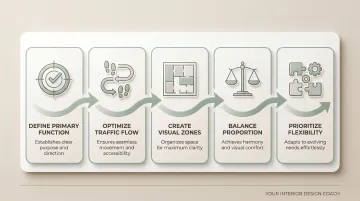
5 Foundational Principles of Smart Space Planning
Define the Primary Function
Every space needs a clear primary purpose before layering secondary functions. A bedroom's primary function is rest; workspace or reading areas are secondary. A living room exists for gathering; individual activities like reading come second.
Without a defined primary function, rooms feel ambiguous and fail to serve any purpose well. Guests experience confusion rather than comfort.
Common applications include hotel rooms (rest primary, work secondary), living rooms (gathering primary, reading secondary), and Airbnb studios (sleeping primary, dining/working secondary).
Plan Traffic Flow and Circulation
The foundation of good space planning is the "3-foot rule", maintaining 36 inches of clear width for main pathways. This standard, established by the ADA and universal design guidelines, makes sure movement stays comfortable for all guests.
Start by identifying natural pathways between entry points and destinations like beds, bathrooms, and seating areas. Position anchor pieces (beds, sofas, desks) first, then build supporting furniture around them without blocking movement. Allow 32 inches minimum at pinch points like doorways.
Walk through your space following the most common guest routes. Turning sideways or adjusting course signals circulation problems that need fixing.
Create Visual and Functional Zones
Zoning divides space into distinct areas without physical walls, essential for open-plan layouts and multi-functional rooms.
Effective zoning techniques include:
- Area rugs that define dining and seating boundaries
- Furniture arrangement creating "invisible architecture" (sofa backs frame conversation areas)
- Lighting changes signaling transitions (pendants over dining, floor lamps for reading)
- Level variations separating spaces (raised platforms, sunken seating)
Balance Proportion and Scale
Furniture size relative to room dimensions determines whether a space feels spacious or cramped, balanced or awkward.
Key proportion guidelines:
- Furniture should cover no more than 40% of floor surface
- Coffee tables work best at two-thirds the sofa length
- Table heights should stay within 4 inches of sofa seat height
- Small rooms need appropriately scaled pieces
Pushing all furniture against walls in large rooms creates awkward distances and dead center space. Instead, float furniture to create intimate, purposeful groupings that feel balanced.
Prioritize Flexibility and Adaptability
Modern spaces benefit from multi-functional design that accommodates changing needs. Whether you're designing a home office that doubles as a guest room or an Airbnb that serves different guest types, adaptability makes sure every user finds the space functional.
Work flexibility in through:
- Modular furniture reconfiguring for different activities
- Movable elements like ottomans, side tables, and room dividers
- Convertible pieces including sofa beds, drop-leaf tables, and nesting tables
Hospitality trends increasingly emphasize adaptability, allowing guests to customize their environment for work, dining, or relaxation — a principle that works just as well in residential spaces. In my experience, multi-functional rooms work best when the flexibility feels intentional instead of making the space feel overcrowded or visually busy. I help clients apply these same principles so a room can serve multiple purposes without sacrificing comfort or flow.
Practical Techniques That Work in Both Settings
Strategic Furniture Placement for Flow
Start with proven spacing standards:
- 16-18 inches between sofa and coffee table (reach distance with legroom)
- 18-24 inches between large furniture pieces in tight spaces
- 36 inches from table edge to wall/obstruction for dining areas
Position seating 4-7 feet apart in arrangements that facilitate eye contact, the social distance zone that encourages natural conversation. Corner-to-corner or side-by-side seating feels more intimate than face-to-face across a table. In my experience with rental clients, getting these distances right is what turns a "nice" space into one that guests specifically mention in their reviews.
In living rooms, create U-shaped or L-shaped seating arrangements rather than linear rows. This encourages interaction and feels more welcoming.
Lighting Layers to Define Space and Mood
Effective lighting uses four layers:
- Ambient - General illumination from ceiling fixtures or recessed lights
- Task - Focused light for activities (reading lamps, desk lights)
- Accent - Highlighting features (artwork, architectural details)
- Decorative - Fixtures as design elements (statement pendants, chandeliers)
Color temperature affects how spaces feel:
- Warm light (2700-3000K) promotes relaxation and hospitality
- Cool light (4000K+) supports alertness and productivity
- Dimmable options provide versatility for different times and moods
Research confirms that lighting parameters like illuminance and color temperature are key determinants of interior comfort.
Storage Solutions That Reduce Visual Clutter
Hidden storage maintains clean sightlines and reduces guest anxiety about where to place belongings.
Effective storage ideas include:
- Built-in shelving with closed lower cabinets
- Under-bed storage drawers or bins
- Ottomans and benches with hidden compartments
- Vertical storage (wall-mounted shelves, tall cabinets)
- Multi-functional furniture (storage beds, lift-top coffee tables)
Visual clutter creates cognitive overload. When guests see clear surfaces and obvious storage, they relax. If you're struggling with storage solutions for your space, working with an interior design coach can help you identify opportunities you might be missing. Still stuck on where to start? Reach out for a free consultation at 408-306-5003, and we can work through your specific space together.
Color and Material Cohesion
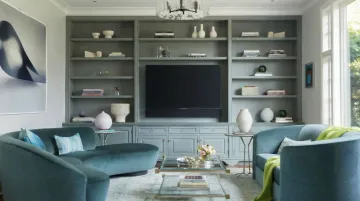
Consistent palettes and materials create visual flow between spaces, making environments feel larger and more intentional.
Apply these guidelines:
- Establish a neutral foundation (walls, large furniture)
- Add 2-3 accent colors in textiles and accessories
- Vary textures (smooth, rough, soft, hard) for visual interest without chaos
- Repeat materials across spaces for continuity (wood tones, metal finishes)
Focal Points and Visual Anchors
Every room needs a clear focal point that organizes the rest of the space, a feature that draws the eye and establishes hierarchy.
Natural focal points include:
- Fireplaces, architectural features, large windows with views
- In bedrooms: headboard wall
- In living rooms: media center or fireplace
When natural focal points are lacking, create them:
- Large-scale artwork or gallery wall
- Accent wall with bold color or texture
- Statement furniture piece
- Dramatic lighting fixture
Biophilic Elements for Emotional Comfort
Adding nature-based elements connects the technical aspects of space planning with emotional comfort. Natural elements support wellbeing and perceived quality. Studies of hotel venues found visual and material connections with nature present in 84% and 77% of spaces respectively.
Work biophilic design in through:
- Potted plants (real or high-quality artificial)
- Maximized natural light with sheer window treatments
- Natural material accents (wood furniture, stone surfaces, woven textiles)
- Nature-inspired artwork or photography
Biophilic design supports restoration and can measurably decrease stress responses.
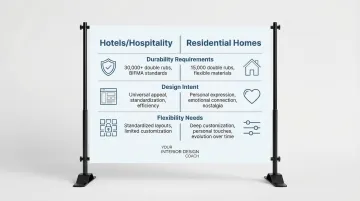
Key Differences: Homes vs. Hotels
While foundational principles apply universally, execution differs based on context.
Durability Requirements
Hospitality standards:
- Fabrics must withstand 30,000+ double rubs (Wyzenbeek test) for heavy commercial use
- BIFMA standards govern commercial furniture safety and performance
- Surfaces designed for rigorous cleaning protocols
Residential standards:
- 15,000 double rubs suitable for domestic use
- More flexibility in material selection
- Lower performance requirements
Design Intent
Hotels prioritize:
- Universal appeal across diverse guests
- Operational efficiency
- Standardization across units
Homes prioritize:
- Personal expression and lifestyle fit
- Emotional connection
- Nostalgia and memory
Flexibility Needs
Hotels require:
- Standardized layouts for diverse guests
- Limited customization options
- Intuitive universal design
Homes allow:
- Deep customization to occupants' routines
- Quirky personal touches
- Evolution with family changes
Despite these differences, both hotels and homes benefit from the same core principles: clear circulation, appropriate scale, effective zoning, and thoughtful lighting.
Common Space Planning Mistakes to Avoid
Even experienced property owners and managers fall into these common traps that quietly undermine guest comfort:
Pushing furniture against walls: Creates awkward distances in room centers and dead space. In larger rooms, float furniture to create intimate groupings.
Ignoring scale and proportion: Oversized furniture in small rooms makes spaces feel cramped; undersized pieces in large rooms create visual imbalance and emptiness.
Failing to define zones: Ambiguous spaces confuse guests about intended use. Clear zoning through rugs, furniture arrangement, or lighting removes this confusion.
Insufficient lighting layers: Relying on a single overhead fixture creates harsh shadows and visual fatigue. Multiple light sources at different heights provide flexibility and comfort.
Weak focal points: Without a clear visual anchor, rooms lack organization and feel chaotic.
Spotting these issues in your own space can be challenging. Sometimes you need someone to ask the questions you didn't know to consider. I work with clients to identify those space planning problems and find practical solutions using existing furniture. Book a free consultation here.
Implementing Smart Space Planning on Your Own
Step-by-step approach:
- Measure your space and existing furniture - Record dimensions accurately, including ceiling height and window locations
- Identify primary and secondary functions - What must this room accomplish first? What additional activities should it support?
- Sketch 2-3 layout options - Use graph paper or free online tools to picture arrangements
- Test with temporary placement - Move furniture to test circulation and functionality before committing
- Apply the "live with it" principle - Try each layout for several days to assess real-world performance
Evaluation questions:
- Can you move through the space without adjusting course?
- Is the room's purpose immediately clear?
- Do furniture pieces feel proportional to the room?
- Are there adequate surfaces for guests' belongings?
- Does lighting support different activities and moods?
Your Quick Recap
Hospitality research shows that spatial layout accounts for over half of a guest's perceived value. That is not a number about furniture or decor - it is a number about how a room makes someone feel before they consciously evaluate anything. Getting the basics right does not require a renovation; it requires clear thinking about flow, proportion, and purpose.
- Most space improvements come from rearranging what you already own, not from buying anything new
- Clear pathways reduce anxiety before guests consciously realize there is anything to feel good about
- The 26% furniture coverage principle is the fastest way to test whether your space is overcrowded
- Lighting layers create zone definition without any physical barriers or renovation work
- For Airbnb hosts, spatial comfort is directly connected to review scores and repeat bookings
If you're still feeling stuck and haven't been able to move things forward, let's talk! Reach out for a free consultation at 408-306-5003, and we can take it from there.
Frequently Asked Questions
How much does professional space planning cost for a home or Airbnb property?
Professional interior design costs range from $100-$500 per hour for consultations to $8,523 average for full projects. YIDC's design coaching offers an affordable middle-ground with expert guidance without full-service pricing.
Can I improve my space planning without buying new furniture?
Most improvements come from rearrangement and strategic editing rather than purchases. Repositioning existing pieces, removing excess furniture, and improving circulation often transform spaces without spending a dollar.
What's the biggest space planning mistake Airbnb hosts make?
Over-furnishing spaces with unclear purposes. Hosts often cram in furniture thinking "more is better," but this confuses guests and reduces comfort. Clear, well-defined zones with adequate circulation perform better.
How do I know if my space plan is actually working for guests?
Watch for friction points like hesitation, awkward movement, or items left in unusual places. Review guest feedback mentioning comfort or layout, and ask overnight visitors directly about their experience.
Do I need an interior designer for basic space planning improvements?
Many improvements can be DIY, but a design coach or consultant speeds up the process and helps avoid costly mistakes. Professional guidance is particularly valuable when you feel stuck or need validation for decisions.
How long does it take to see results from space planning changes?
Physical changes can happen in a single day: moving furniture and adjusting layouts is quick. However, assessing effectiveness takes a few weeks of living with the new layout to understand how it performs under real conditions.