Here’s why that matters for your rental: high-end tourism is already a $1.38 trillion market and is expected to grow faster than other luxury segments through 2028. But that growth does not mean every luxury rental benefits automatically. Guests are choosing stays with a clear reason to book - deep rest, a wellness reset, adventure, or a local experience that feels real. Without that clear point of view, a rental ends up competing on price instead of value.
So what does it take to compete right now? This article walks through the 5 trends reshaping luxury vacation rental design in 2026 - what's behind them, and what you can do to make your space work better for you.
Your Quick Summary
- Biophilic design and sensory-led interiors are now baseline expectations in the luxury rental market
- Smart home tech and AI personalization have shifted from nice-to-have perks to guest expectations
- Wellness-dedicated spaces drive significant booking premiums among high-value travelers
- Sustainability influences booking decisions, with a growing share of luxury travelers paying meaningful premiums for eco-conscious properties
- Experience-first, socially shareable spaces are major drivers of organic marketing and repeat stays
Biophilic Design and Sensory-Led Interiors
Biophilic design in luxury vacation rental interiors means using natural materials, organic shapes, plenty of light, and living elements to create spaces that feel calm and connected to nature.
This has gone well beyond adding a few plants. It's now a full sensory approach, layering natural stone, raw wood, linen, warm lighting, and a curated scent to set a mood that guests feel the moment they step in.
When it's done well, your space stops feeling like a rental and starts feeling like a retreat. The distinction matters for your reviews: guests describe the feeling with words like "restorative," and those words directly influence algorithm visibility and five-star ratings.
The Physiological ROI of Nature-Connected Spaces
There's real science behind why this matters. Meta-analyses show that visual and physical connections to nature significantly decrease cortisol, lower systolic blood pressure by 3.82 mmHg, and reduce diastolic blood pressure by 2.21 mmHg. That's why guests use words like "restorative" and "relaxing" in their reviews, words that drive algorithm visibility and five-star ratings. When your space helps people feel calmer, they come back. And repeat guests mean your calendar fills without constantly competing for new bookings.
Real-world applications that drive bookings:
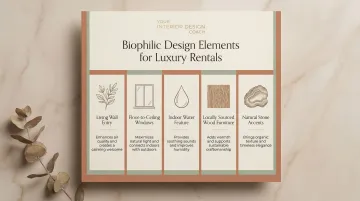
- Living walls in entry areas that create immediate visual impact
- Floor-to-ceiling windows framing natural views
- Indoor water features that add ambient sound
- Locally sourced wood furniture that tells a regional story
- Natural stone accents in bathrooms and kitchens
Why This Trend Is Accelerating in 2026
Post-pandemic demand for restorative environments, combined with the wellness travel boom, has moved biophilic design from a nice extra to something guests actively filter for. Exposure to natural environments is linked to decreases in anxiety and rumination, which is why a well-executed biophilic space doesn't just look good; it makes guests feel noticeably more at ease.
Top-performing properties are already reflecting this. Vrbo's 2024 Vacation Rentals of the Year prominently featured open-concept living rooms that blend indoors and outdoors, a design choice that photographs well and reads instantly on listing pages.
Where Most Properties Get Stuck
Pulling biophilic elements together in a way that feels cohesive is one of the most common challenges I see. You're coordinating materials, lighting, and spatial flow all at once, and getting it wrong is expensive to redo. A space that feels assembled rather than designed is immediately sensed by guests, even when they can't name why.
Starting with a single clear material story, stone plus linen plus warm light, for example, prevents that. If that's where you're stuck right now, interior design coaching for vacation rentals is exactly what I help with - and there's no wrong place to start.
If you're feeling stuck and not sure where to begin, give me a call at 408-306-5003 - a free consultation is a low-pressure way to get some clarity and figure out a direction that works for your space.
Smart Home Technology and AI-Powered Personalization
Luxury guests in 2026 arrive expecting your rental to feel ready for them, not just functional. Connected home systems and AI tools now set the standard, from smart climate controls to apps that recommend local restaurants based on each guest's tastes.
Technologies Guests Now Expect
As of 2024, 68% of rental properties were using smart locks, and nearly 74% frequently or always offer self-check-in to meet demand for smooth, contactless arrival. These aren't premium features anymore - they're the baseline. If your setup doesn't include them, you're already a step behind.
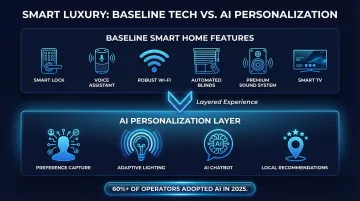
Baseline smart home features for luxury rentals:
- Keyless smart entry with remote access management
- Voice-controlled lighting and thermostats
- High-speed fiber Wi-Fi with dedicated workspaces
- Automated blackout blinds
- Premium sound systems with integrated streaming
- Smart TVs with major streaming platforms preloaded
The AI Personalization Layer
Those basics handle comfort. AI handles the experience layer. AI adoption in the short-term rental space jumped to over 60% of operators in 2025, and the results are real: AI-drafted guest communications now reach 85-92% approval rates, and the share sent without any human edits rose from 23% to 45%. In practice, that means fewer late-night messages and more time focused on the property itself.
AI-powered guest experience elements:
- Pre-arrival preference capture (dietary restrictions, activity interests)
- Adaptive lighting schedules based on occupancy patterns
- AI chatbot concierge services answering questions 24/7
- Personalized local recommendations based on guest profile
Operational Benefits That Reduce Overwhelm
Smart systems also reduce the stress of managing remotely. Fewer support messages, faster issue detection via smart sensors, and automated lock access mean you're not always on call. Nearly 74% of properties are now managed remotely, handling everything from lock access to maintenance alerts through mobile dashboards.
Wellness Spaces as Standard Luxury Amenity
Wellness isn't just a hot tub on the deck anymore. It's become a core design category in luxury rentals. Properties are now being compared on their wellness offerings the same way they're compared on bedroom count or kitchen quality - and guests who prioritize wellness are your highest-value segment.
The Macro Tailwinds of Wellness Tourism
The global wellness tourism market reached $893.9 billion in 2024, representing 13.8% year-over-year growth, and is projected to hit $1,383.3 billion by 2029. Here's what that means for your rental: a domestic wellness tourist spends 163% more than the average domestic tourist. That's not a niche group - that's your highest-value guest.
Wellness Amenities Driving Bookings in 2026
High-impact wellness features:
- Private infrared saunas (increasingly favored over hot tubs due to lower maintenance)
- Cold plunge pools or contrast therapy setups
- Yoga/meditation rooms with intentional acoustics and lighting - a dedicated space that guests don't have to rearrange or share with other functions is what makes a wellness ritual feel like a genuine part of the stay
- Steam showers with spa-grade fixtures
- Fitness areas with quality equipment, not just dumbbells
Guests are actively filtering for swimming pools, tranquil gardens, and private saunas. How those features are designed and finished matters just as much as whether they exist - a sauna with cedar finishes and soft lighting earns reviews; one bolted into a garage corner does not.
Design Quality Matters as Much as the Amenity Itself
A sauna tucked awkwardly into a garage feels very different from one with cedar finishes, soft lighting, and a forest-facing window. The look and feel of a wellness feature directly affects how guests experience and review it.
In my experience, prioritizing one or two signature wellness features done at a high design level gets better results than trying to add every possible amenity. Design quality, not square footage, is what earns five-star wellness reviews.
Still feeling stuck on which wellness feature to prioritize, or how to pull the look together? Reach out for a free consultation at 408-306-5003 and we can work through it together.
Sustainable Luxury and Eco-Conscious Design
Sustainable luxury in 2026 means pairing premium guest comfort with real environmental responsibility. High-end rentals are doing both through:
- Solar energy systems and smart energy management
- Reclaimed wood and locally sourced decor
- Low-VOC finishes and organic textiles
- Zero-waste amenities that communicate values without sacrificing comfort
The Financial Case for Eco-Upgrades
Sustainability has become a real pricing lever. Thirty-eight percent of luxury travelers will pay 30% to 50% more for environmentally conscious accommodations. And more hosts are acting on it: 80% of rental properties globally now incorporate at least one environmentally sustainable practice, which means the bar is rising and non-communicating hosts are being filtered out.
Quantifying the Green Premium
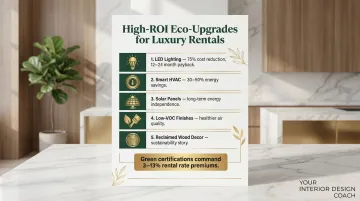
Green certifications command rental rate premiums of 3% to 13%, generating an extra $4,500 to $19,500 annually on a $150,000 property. Comprehensive green upgrades also reduce total operating costs by 30% to 50%, which means the investment pays back faster than most people expect.
High-return eco-upgrades:
- LED lighting retrofits (75% reduction in lighting costs, 12-24 month payback)
- Smart HVAC systems (30-50% energy cost reduction)
- Solar panels (long-term energy independence)
- Low-VOC finishes and organic textiles (healthier indoor air quality for your guests)
- Reclaimed wood and locally sourced decor (unique aesthetic with a sustainability story)
Who's Driving This Trend
Among younger travelers, 38% of millennials and 42% of Gen Z take sustainability-related actions when planning a trip. If you're not communicating a sustainability story, you're invisible to a growing portion of the luxury market - and corporate retreats with ESG mandates are now a significant share of that segment.
Experience-First and Socially Shareable Spaces
Today's luxury rental guests want more than somewhere to stay, they want a space worth photographing and sharing.
Social Media as the New Booking Engine
Social platforms have gone from inspiration boards to primary discovery engines. Half of consumers make purchases based on trusted influencer content, and 50% express a desire to book trips they see on their social feeds. 81% of Millennial and Gen Z travelers now plan getaways based on what they've seen on screens, making social visibility a direct revenue driver for your rental.
Designing for Viral Travel Intents
There are specific travel trends worth designing for - and they're very shareable:
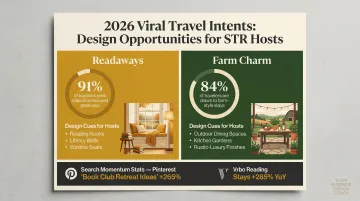
2026 Social Travel Trends:
- Readaways: 91% of travelers want getaways built around reading and relaxation. Think dedicated reading nooks, library walls, and well-lit window seats.
- Farm Charm: 84% of travelers are drawn to farm stays. Outdoor dining spaces, kitchen gardens, and rustic-luxury finishes hit this niche directly.
Vacation Rentals That Guests Want to Share Online
Properties that feel visually memorable tend to generate more organic visibility online. When guests naturally want to photograph and share a space, the design itself starts becoming part of the marketing. That kind of exposure builds familiarity, increases direct traffic, and helps a property stand out in an increasingly saturated rental market, especially on platforms where travelers often discover destinations visually before they ever search for them.
Design strategies for shareability:
- Create "camera-ready" vignettes tied to trending intents
- Install statement lighting fixtures that photograph well
- Use bold, cohesive color palettes that stand out in feeds
- Provide in-home prompts and QR codes linking to your booking engine
Multi-Generational and Group-Friendly Layouts
Spaces with flexible communal areas, varied sleeping configurations, and activity zones attract larger bookings - and larger groups naturally create more content and word-of-mouth.
Design elements that support group stays:
- Oversized dining tables and open kitchen layouts for communal meals
- Dedicated activity zones (game rooms, outdoor fire pits, screening areas)
- Multiple sleeping configurations to fit mixed-age groups
- Flexible living areas that convert for yoga, presentations, or celebrations
What's Driving These Luxury Vacation Rental Trends in 2026
Post-pandemic habits, generational wealth transfer, and accessible smart home technology are all converging to reshape what "luxury" means to travelers - and what any property needs to offer to stay competitive at the high end of the rental market.
The Demographic Changing of the Guard
Gen Z and millennials accounted for half of all U.S. travelers as of late 2025. In the high-end market specifically, 80% of luxury leisure travelers are under 60, and Millennials and Gen Z are expected to account for 60% to 70% of all luxury purchases by 2030.
Their expectations - shaped by digital habits, sustainability values, and a preference for experiences over things - are changing what the market looks for. This generational shift is the biggest demand-side force to understand when thinking about your rental's design direction.
Supply Rebalancing and Market Polarization
Luxury short-term rental supply is growing fast, which means differentiation is now about design and amenity quality rather than location alone. Guests are choosing trips that are clearly about rest or clearly about thrill.
The Technology Democratization Driver
Smart home tools and systems have become much more accessible, lowering the barrier to offering hotel-grade experiences in private rentals. Keyless entry, automated climate control, and AI-assisted guest communication, once exclusive to boutique hotels, are now baseline expectations at the high end of the rental market.
Future Signals to Watch
Emerging shifts worth keeping an eye on:
- Hyper-local immersive design, where every element of the property tells the story of its specific destination
- Neuroscience-informed interior design, using color, light, and acoustics based on emotional response research
- Climate-adaptive properties, built to extend seasonal usability and withstand environmental changes
Your Quick Recap
Luxury rental guests are not just buying a stay - they are buying proof that someone thought ahead on their behalf. The gap between good and great often comes down to one or two things executed at a high level, not a checklist of features. If your property feels assembled, guests sense it even when they cannot name it.
- Guests decide within seconds of seeing your first photo - design signals value before check-in
- Smart tech removes friction; friction, not price, is what kills five-star streaks
- One wellness element done well beats five mediocre amenities every time
- Sustainability is not just values - it is a real pricing lever with the right guest segment
- Properties with a clear design story get shared on social; generic ones do not
- Booking your upgrades before peak season locks in the rate increase when demand peaks (bonus insight)
- A defined design identity protects your nightly rate when local supply grows (bonus insight)
If you're still feeling stuck and haven't been able to move things forward, let's talk! Reach out for a free consultation at 408-306-5003, and we can take it from there.
Frequently Asked Questions
What defines a luxury vacation rental in 2026?
Luxury is now defined by the quality of design, the depth of amenities (wellness, smart tech, personalization), and the emotional experience delivered - not just square footage or location. High-end guests expect an environment where every detail feels intentional. The real question isn't just what your property has, but how it makes people feel when they're there.
Which luxury rental trends offer the best ROI?
Smart home technology and wellness amenities consistently deliver strong returns. Even one well-executed feature - like an infrared sauna or a biophilic living wall - can justify a meaningful nightly rate increase, with green certifications alone commanding 3-13% rental rate premiums.
How much should you budget to implement these design trends?
Budgets vary a lot, but targeted upgrades often outperform full overhauls. A single high-impact addition - a wellness corner, smart lighting package, or a biophilic install - can run $500 to $5,000 and still support meaningfully higher nightly rates. I usually recommend starting with two or three well-executed changes rather than spreading your budget thin across every trend at once.
Can a smaller or mid-range rental compete using these luxury trends?
Yes - and this is something I enjoy helping clients work through. A smaller property can absolutely compete by doing one or two things really well, like a beautifully designed wellness corner or a cohesive biophilic aesthetic, rather than trying to match larger properties feature-for-feature. Quality of execution consistently outperforms quantity. There's no wrong place to start.
How does smart home technology improve guest reviews?
Seamless technology removes friction - check-in confusion, temperature issues, connectivity problems - that often leads to negative reviews. Good tech also creates positive moments guests actually mention in their reviews. Properties that get both sides right tend to see steady rating improvements over time.
Do eco-friendly upgrades actually attract more luxury bookings?
Yes, and the data backs it up. High-income travelers, particularly those under 45, are actively looking for sustainable properties. Thirty-eight percent of luxury travelers are willing to pay 30% to 50% more for environmentally conscious accommodations, making eco-credentials a real competitive advantage. If you're not sharing your sustainability story, you're leaving that premium on the table.